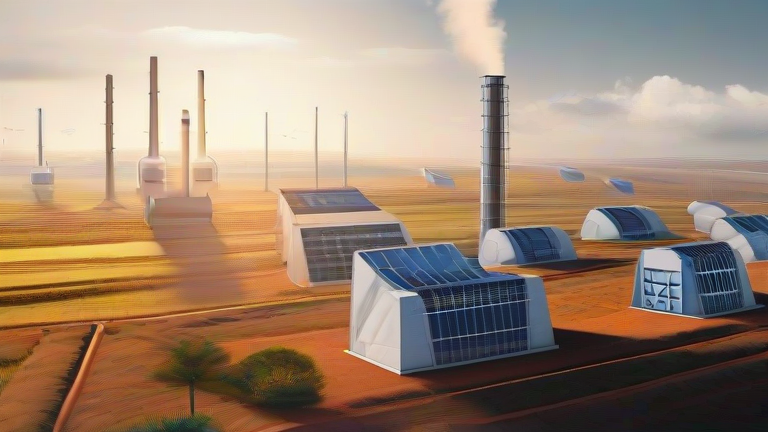
TL;DR: Major climate tech firms are aggressively scaling direct air capture (DAC) facilities to meet stringent net-zero targets, deploying modular units capable of removing tons of CO2 daily. This surge in investment signals a shift from experimental pilots to industrial-scale deployment, fundamentally altering the carbon removal market landscape.
The Rise of Industrial Scale
Direct air carbon capture (DAC) technology, once relegated to the realm of theoretical environmental engineering, has emerged as a critical pillar in global climate strategy. The latest developments mark a pivotal transition from small-scale pilots to gigatonne-scale infrastructure. Companies like Climeworks and Carbon Engineering have announced significant expansions, backed by billions of dollars in venture capital and sovereign wealth fund investments. The core technology relies on large fans drawing ambient air across chemical filters that bind carbon dioxide molecules. Once saturated, these filters are heated in a regeneration chamber to release concentrated CO2, which is then compressed and stored underground in geological formations. The primary challenge has always been energy intensity, but recent innovations in modular design and renewable energy integration have drastically improved the energy efficiency per ton of carbon removed.
If you want to dig deeper, check out our guide on How QuickBooks Desktop Helps Small Business Owners Track Inv.
Technical Specifications and Performance
Current state-of-the-art DAC systems operate with a capture capacity ranging from 500 to 4,000 tons of CO2 per year per unit, though new designs aim for 10,000-ton capacities. The energy requirement, previously estimated at 300-500 kWh per ton, is being driven down to under 200 kWh through advanced heat recovery systems and lower-temperature regeneration processes. These systems utilize non-proprietary amines or solid sorbents that can be regenerated multiple times, reducing material costs. The purity of the captured CO2 exceeds 99%, making it suitable for secure geological sequestration or utilization in enhanced oil recovery and synthetic fuel production. Furthermore, the modular nature of the hardware allows for rapid deployment and scaling, reducing construction timelines from years to months.
Industry Impact and Market Dynamics
The proliferation of DAC technology is reshaping the carbon credit market. Unlike natural carbon sinks, which face scrutiny over permanence and additionality, DAC offers verifiable, durable removal. This clarity is attracting corporate buyers who need high-quality credits to offset hard-to-abate emissions in sectors like aviation and heavy industry. The industry impact extends beyond environmental metrics; it is creating a new supply chain for high-purity CO2, which is a valuable feedstock for chemicals and materials. However, the sector faces hurdles regarding cost parity. While the levelized cost of DAC is decreasing, it remains higher than other mitigation strategies like electrification. Therefore, the industry is betting on long-term contracts and government subsidies to bridge the gap. As regulatory frameworks tighten, particularly with the implementation of carbon border adjustments, the demand for high-integrity removal technologies is expected to outstrip supply, driving further innovation and investment in this critical field.
FAQ
Q: How does DAC differ from point-source capture?
A: DAC removes CO2 directly from the ambient atmosphere, whereas point-source capture extracts it from concentrated emission sources like factory stacks.
Q: What is the primary energy source for these facilities?
A: Most modern DAC facilities rely on renewable energy sources, particularly geothermal or wind power, to minimize their own carbon footprint.
Q: Is the captured carbon permanently stored?
A: Yes, the CO2 is typically compressed and injected into deep geological formations where it is stored safely for millions of years.
Leave a Reply