
Quantum Computing Reaches Error-Corrected Milestones
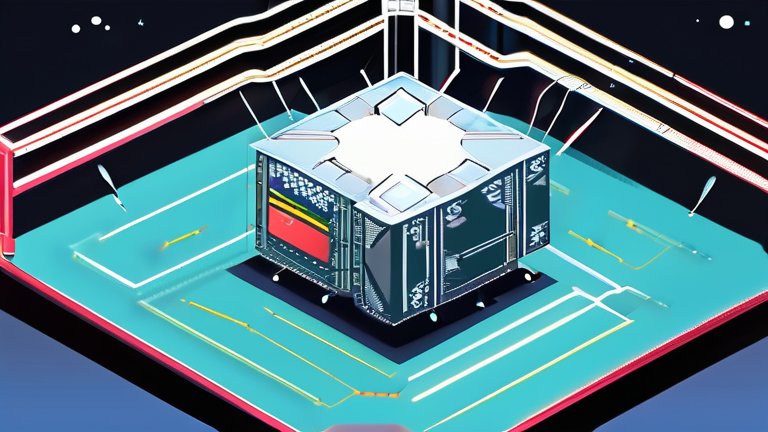
For decades, the promise of quantum computing has been hindered by a singular, persistent problem: noise. Unlike classical bits, which are stable 0s and 1s, quantum qubits are fragile. They exist in a state of superposition, making them incredibly susceptible to environmental interference, leading to calculation errors. However, recent breakthroughs in logical qubit construction suggest that the industry has finally crossed a critical threshold. Major tech giants and research institutions have announced the successful implementation of fault-tolerant error correction, marking a transition from experimental physics to engineering reliability.
The latest developments focus on the creation of “logical qubits.” Instead of relying on a single physical qubit, researchers now encode information across dozens or even hundreds of physical qubits. This redundancy allows the system to detect and correct errors without collapsing the quantum state. For instance, recent experiments have demonstrated logical qubits that maintain coherence longer than their underlying physical constituents. This is not merely an incremental improvement; it is a fundamental shift in capability. The new hardware specifications show error rates dropping below the critical threshold required for scalable algorithms, a feat previously thought to be years away.
The implications for the industry are profound. Pharmaceutical companies are already exploring how these stable quantum systems can accelerate drug discovery by simulating molecular interactions with unprecedented accuracy. In finance, banks are preparing for quantum-safe encryption standards, while simultaneously using these new systems to optimize complex portfolio risks. The ability to run long, complex algorithms without catastrophic failure means that problems previously deemed unsolvable due to time constraints are now entering the realm of practical possibility.
However, challenges remain. Scaling these systems requires massive infrastructure upgrades, including near-absolute zero cooling systems and advanced control electronics. The cost of building and maintaining these data centers is significant, limiting initial access to well-funded corporations and research labs. Yet, the trajectory is clear. As error correction becomes more efficient, the number of physical qubits required per logical qubit will decrease, making the technology more accessible. This milestone is not the end of the journey, but rather the beginning of a new era where quantum advantage is not just a theoretical concept, but a tangible tool driving innovation across multiple sectors.
Leave a Reply