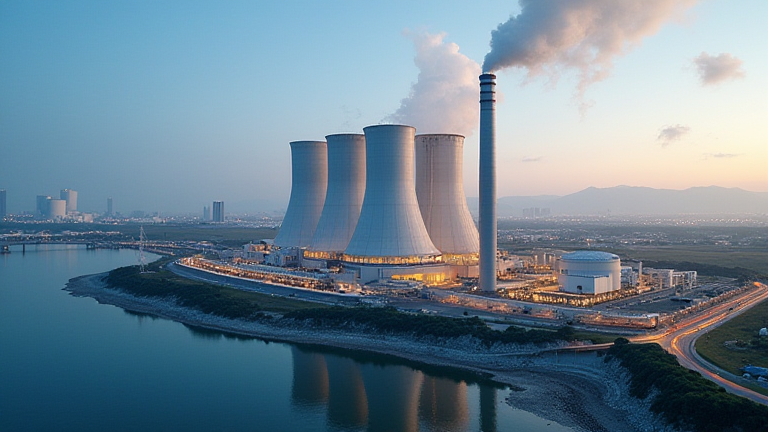
TL;DR: Small Modular Reactors are booming because they offer scalable, cost-effective nuclear power that aligns with the urgent need for reliable, low-carbon energy to support heavy industrial decarbonization and data center demands. Unlike traditional gigawatt-scale plants, SMRs provide faster deployment timelines and lower upfront capital risks, making them attractive to both private equity and established utility giants seeking stable long-term returns.
The Shift from Gigawatts to Modularity
The nuclear energy sector is undergoing a profound structural transformation, moving away from the monolithic, decade-long construction projects of the 20th century toward flexible, factory-built units. This shift is driven by a convergence of technological maturation and a critical market gap for firm, zero-carbon electricity. Traditional large-scale reactors often face cost overruns and permitting delays that erode investor confidence. In contrast, Small Modular Reactors (SMRs) are designed for serial production, allowing developers to mitigate risk through phased deployment. Recent market analysis indicates that global investment in SMR technologies has surged, with projected capital expenditure reaching over $100 billion by 2030. This financial influx is not merely speculative; it is underpinned by long-term power purchase agreements (PPAs) signed with high-consumption sectors such as semiconductor manufacturing, hydrogen production, and artificial intelligence data centers.
If you want to dig deeper, check out our guide on Reshoring Surge: Chips & Clean Energy Accelerate.
Expert Insights on Market Dynamics
Industry leaders suggest that the primary driver for this boom is the reliability of baseload power. While renewable energy sources like solar and wind are cost-competitive, their intermittency remains a challenge for grid stability. Experts note that SMRs fill this specific niche by providing consistent output without the carbon footprint of fossil fuels. Furthermore, the modular nature of these reactors allows for siting flexibility. Unlike large plants that require massive infrastructure and specific geographic locations, SMRs can be deployed closer to load centers, reducing transmission losses. Financial analysts point out that the reduced initial capital requirement for SMRs lowers the barrier to entry for non-traditional players, including tech companies and sovereign wealth funds, thereby diversifying the investor base and accelerating project timelines. The regulatory landscape is also evolving, with agencies like the NRC in the United States and the IAEA globally establishing clearer frameworks for modular nuclear systems, further de-risking the investment proposition.
Future Predictions and Strategic Implications
Looking ahead, the next decade will likely see the first commercial SMRs entering the grid in North America and Europe. Predictions suggest that by 2035, SMRs could account for 20% of new nuclear capacity additions. This growth will be supported by advancements in digital twin technology and automated construction methods, which promise to further reduce costs and improve safety profiles. However, challenges remain, particularly regarding waste management and public perception. Successful industry players will need to engage proactively with communities to build trust and demonstrate the safety and economic benefits of nuclear power. The strategic implication for corporations is clear: securing access to SMR-generated power is becoming a key competitive advantage in the race toward net-zero emissions. As grid congestion increases and energy prices fluctuate, companies that lock in long-term contracts with SMR developers will gain stability and sustainability credentials, positioning themselves favorably in an increasingly regulated and eco-conscious market environment. The boom in corporate power deals is not just a trend; it is a fundamental restructuring of how energy is procured and deployed in the modern industrial age.
FAQ
Q: What is the primary advantage of SMRs over traditional large reactors?
A: The primary advantage is scalability and lower upfront capital cost, allowing for faster deployment and reduced financial risk through serial production.
Q: Which industries are most interested in purchasing power from SMRs?
A: High-energy-consuming sectors such as data centers, semiconductor fabs, and green hydrogen producers are the most active buyers due to their need for reliable, low-carbon baseload power.
Q: When are commercial SMRs expected to be widely available?
A: Initial commercial deployments are expected in the mid-2020s, with widespread market penetration and significant capacity additions anticipated by 203
Leave a Reply