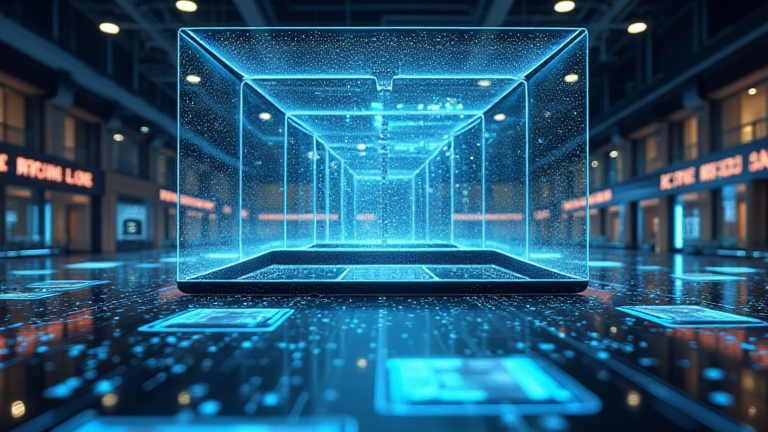
Spatial Computing Goes Mainstream: Retail’s Next Big Leap
TL;DR: Spatial computing is no longer a niche experiment but a viable tool for boosting retail engagement and conversion rates. It bridges the gap between online browsing and physical shopping by allowing customers to visualize products in their own environments with unprecedented accuracy.
The retail landscape has always struggled with the “last mile” of the customer experience: the uncertainty of how a product will look or fit in a real-world context. Spatial computing, powered by advanced augmented reality and volumetric rendering, solves this pain point by removing guesswork. Recent hardware advancements have made these experiences accessible without requiring specialized headsets, relying instead on standard smartphones and tablets. This accessibility is the key driver behind its rapid adoption across major e-commerce platforms and brick-and-mortar retailers alike.
If you want to dig deeper, check out our guide on 10 Lifestyle Habits That Actually Change Your Life.
Feature Highlights
The core value proposition of modern spatial computing in retail lies in its seamless integration with existing digital ecosystems. First, high-fidelity 3D model generation allows brands to create interactive assets that mimic real-life textures and lighting conditions. Customers can rotate, zoom, and even “try on” virtual items with photorealistic precision. Second, persistent object placement ensures that virtual items remain anchored in the user’s space, even as they move around the room. This stability builds trust, as users feel the digital representation is faithful to reality. Third, social sharing features enable customers to capture and share their spatial experiences instantly, turning individual purchases into viral marketing moments. These features collectively reduce return rates by ensuring that what customers see online matches what they receive physically.
Comparisons with Traditional AR
While traditional augmented reality apps often require users to manually calibrate their environment or rely on simplified 2D overlays, spatial computing offers a more immersive and intuitive experience. Traditional AR may struggle with occlusion, where digital objects do not properly interact with physical surroundings. In contrast, spatial computing utilizes depth sensing and environmental understanding to allow virtual objects to be cast in shadows or partially hidden by real-world furniture. Compared to virtual reality, which isolates the user from their surroundings, spatial computing enhances the physical world. This distinction is critical for retail, where the goal is to augment the current location rather than replace it. The result is a lower barrier to entry for consumers who do not want to wear bulky headsets or disconnect from their immediate environment.
Call to Action
Retailers who hesitate to adopt spatial computing risk falling behind competitors who are already leveraging this technology to drive sales. The initial investment in 3D asset creation and platform integration is justified by the significant decrease in product returns and the increase in average order value. We recommend starting with high-ticket items such as furniture, electronics, or fashion accessories, where visualization provides the most tangible value. Partner with experienced development agencies to ensure your spatial experiences are optimized for mobile performance. Do not wait for the technology to mature further; it is ready for prime time. Embrace this shift now to define the next era of customer engagement in your industry.
FAQ
Q: Is spatial computing only useful for large items like furniture?
A: No, while furniture is a prime use case, spatial computing is increasingly effective for smaller items like eyewear, shoes, and cosmetics, allowing for detailed fit and style checks.
Q: What hardware is required for customers to access these features?
A: Most modern spatial retail applications run on standard iOS and Android smartphones, requiring only a camera and basic internet connection, with no additional hardware purchases needed.
Q: How long does it take to implement spatial computing in an existing store?
A: Implementation timelines vary, but most mid-sized retailers can launch pilot programs within three to six months, depending on the complexity of their 3D asset library and backend integration.
Leave a Reply