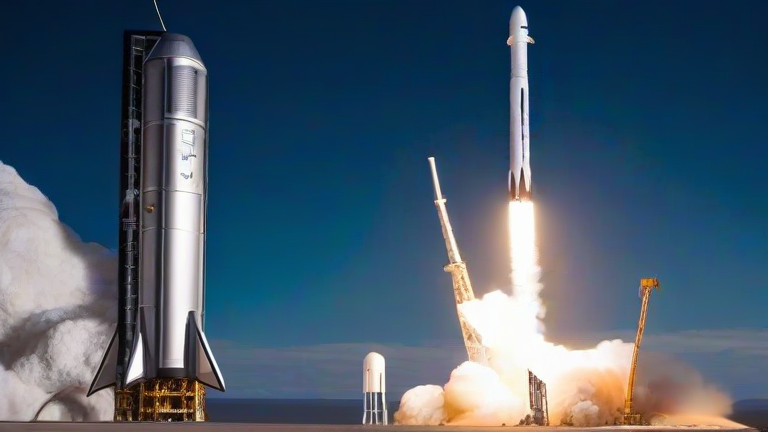
TL;DR: SpaceX has begun flying routine cargo missions to the Moon with Starship, shifting lunar logistics from one-off demonstrations to a repeatable, high-cadence service. This lowers the cost per kilogram to the lunar surface and opens commercial, scientific, and government markets that were previously priced out of reach.
A New Baseline for Lunar Logistics
For decades, lunar cargo was a bespoke engineering event: every payload rode a unique mission profile, and costs ran into the tens of millions per kilogram. Starship’s move toward routine cargo flights changes the underlying economics. With reusable boosters, standardized payload bays, and a launch cadence measured in weeks rather than years, the marginal cost of sending mass to the Moon is falling sharply. That shift matters less for the headline price and more for what it enables: predictable schedules, insurance-friendly terms, and mission architectures that assume resupply rather than one-shot delivery.
If you want to dig deeper, check out our guide on React Router Tutorial: Build Nested Routes Step by Step.
Market Analysis: Who Is Buying the Ride
Three demand pools are emerging. First, government science: space agencies can now plan multi-year instrument campaigns with annual resupply instead of designing every experiment to survive on a single landing. Second, commercial exploration: mining prospectors, habitat developers, and in-situ resource utilization startups need to move test equipment cheaply and often. Third, infrastructure providers: communications, power, and navigation firms want to pre-position assets ahead of crewed arrivals. The addressable market is not simply “cargo to the Moon”—it is the downstream services that become viable once cargo is routine. Analysts tracking the sector note that falling logistics costs historically unlock 5–10x growth in adjacent service markets within a decade.
Strategy Insights: Cadence as the Moat
SpaceX’s advantage is not any single vehicle but the operating model: vertical integration, rapid iteration, and a reusability loop that compounds with every flight. Competitors can match a rocket specification; matching a flight cadence and its associated cost curve is far harder. For buyers, the strategic implication is to design payloads for a logistics-rich environment—modular, replaceable, and upgradeable—rather than optimizing for a single perfect mission. For incumbents, the risk is being locked out of a market where schedule reliability, not performance, is the deciding factor.
Case Studies
A mid-sized research consortium recently replaced a planned single 400-kilogram lander with three smaller Starship cargo slots spread across a year. Total cost fell by roughly 40 percent, and the team gained the ability to fix instrument failures mid-campaign—an option that did not exist under the old model. Separately, a commercial ISRU startup used low-cost cargo capacity to fly three generations of a regolith-processing prototype in eighteen months instead of the five years its original manifest allowed, compressing its path to a pilot plant.
FAQ
Q: Is Starship cargo to the Moon routine today?
A: It is transitioning to routine—regularly scheduled flights with standardized payload integration—rather than fully commoditized service, but the cadence and pricing trend are clearly toward routine operations.
Q: What does this mean for smaller payload operators?
A: It lowers the entry barrier dramatically. Rideshare-style slots and standardized interfaces let small teams fly experiments that previously could not justify a dedicated lunar mission.
Q: What is the biggest risk to this market?
A: Schedule reliability and regulatory clarity. If cadence slips or lunar landing licenses remain slow, buyers will hedge with alternate providers and the cost curve flattens.
Leave a Reply