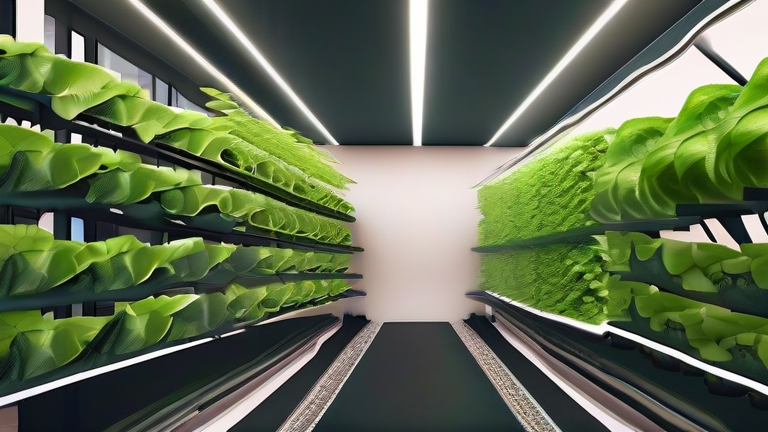
How Vertical Farming Scales to Meet Urban Food Demand
As metropolitan populations swell and arable land shrinks, the traditional model of agriculture faces an existential crisis. Enter vertical farming, a revolutionary approach that stacks crops in controlled environments to maximize yield per square foot. This review examines leading scalable vertical farming systems, analyzing their efficiency, technology integration, and real-world applicability for urban centers striving for food security.

If you want to dig deeper, check out our guide on VR Therapy in Mental Wellness Apps: The Future of Care.
Feature Highlights of Modern Systems
Top-tier vertical farming units distinguish themselves through advanced hydroponic and aeroponic technologies. Key features include automated nutrient delivery systems that ensure precise chemical balance, reducing water usage by up to ninety-five percent compared to conventional farming. Integrated LED lighting arrays offer customizable spectrums, allowing farmers to manipulate plant growth cycles and nutrient density. Furthermore, cloud-connected monitoring dashboards provide real-time data on temperature, humidity, and plant health, enabling remote management and predictive maintenance. These systems are designed for modularity, allowing urban operators to expand capacity incrementally as demand grows, making them ideal for retrofitting unused urban spaces like warehouses or basements.
Comparative Analysis: Vertical vs. Traditional
When compared to traditional field agriculture, vertical farming offers distinct advantages in consistency and land efficiency. Traditional farming is subject to weather volatility, pests, and seasonal limitations, leading to unpredictable yields. In contrast, vertical farms operate in sterile, controlled environments, producing pesticide-free crops year-round with predictable harvest schedules. While the initial capital expenditure for vertical infrastructure is higher, the operational savings from reduced water, labor, and transportation costs often offset these expenses within three to five years. Additionally, the proximity to urban consumers drastically cuts down on food miles, ensuring fresher produce and a lower carbon footprint.
Real-World Scalability and Challenges
Scalability remains the primary hurdle. While pilot projects demonstrate success, large-scale deployment requires significant energy investment for lighting and climate control. However, advancements in renewable energy integration and energy-efficient LED technology are rapidly mitigating these concerns. Successful implementations in cities like Singapore and New York prove that vertical farming can effectively
Leave a Reply