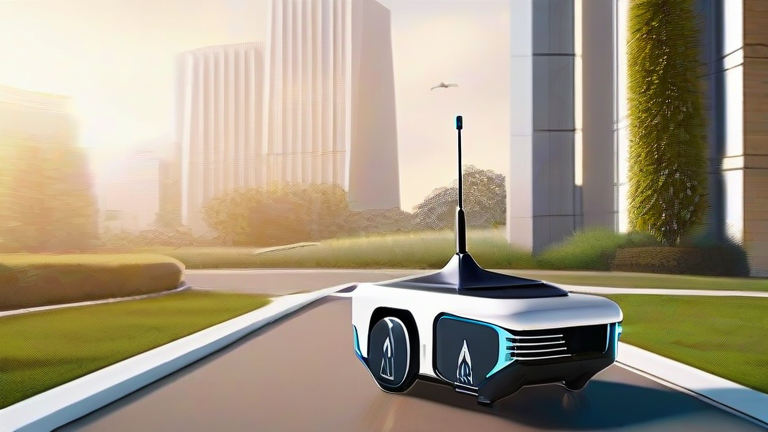
TL;DR: Autonomous delivery drones in urban areas offer rapid, contactless package delivery while reducing traffic congestion and carbon emissions. However, they face significant regulatory, safety, and privacy challenges that require robust technological solutions and community engagement to overcome.
Integrating Aerial Logistics into City Infrastructure
The integration of autonomous drones into urban logistics represents a paradigm shift in how goods move through densely populated environments. As e-commerce continues to surge, traditional ground-based delivery methods struggle with traffic bottlenecks and last-mile inefficiencies. Drones offer a vertical solution, bypassing street-level obstacles entirely. This guide provides a structured approach to understanding the implementation landscape, focusing on practical benefits and the formidable challenges that stakeholders must navigate.
If you want to dig deeper, check out our guide on Remote Work Now Mandates Hybrid Office Days: What You Need t.
Step 1: Assessing Regulatory Compliance and Airspace Rights
Before any physical deployment, operators must navigate the complex legal framework governing urban airspace. Aviation authorities, such as the FAA in the United States or EASA in Europe, have established strict protocols for Beyond Visual Line of Sight (BVLOS) operations. Companies must secure special waivers that demonstrate rigorous safety standards. This involves submitting detailed flight plans, proving redundancy systems, and establishing clear protocols for emergency landings. Failure to adhere to these regulations results in immediate operational halts and substantial fines. Therefore, legal teams must work alongside engineers from day one to ensure compliance.

Step 2: Implementing Advanced Navigation and Collision Avoidance
Urban environments are cluttered with skyscrapers, power lines, and other aircraft. Drones must utilize a combination of GPS, LiDAR, and computer vision to navigate safely. Sensors detect static and dynamic obstacles in real-time, allowing the drone to adjust its trajectory instantly. AI algorithms process this data to predict potential conflicts, such as other drones or birds. Tip: Invest in redundant sensor systems. If one sensor fails due to weather or interference, the backup system ensures the drone can still land safely. This redundancy is critical for public trust and operational reliability.
Step 3: Addressing Privacy and Community Concerns
One of the most significant barriers to adoption is public skepticism regarding privacy. Residents often fear that drones equipped with cameras are surveilling their homes. To mitigate this, companies should adopt a privacy-by-design approach. Cameras can be programmed to blur faces and license plates automatically. Furthermore, flight paths should be kept at sufficient altitudes to minimize noise and visual intrusion. Community engagement is also vital. Hosting town halls to explain safety measures and benefits can build local support. Transparency regarding data collection and storage policies helps alleviate fears and fosters a cooperative relationship between service providers and the community.
Step 4: Optimizing Energy Efficiency and Battery Management
Urban delivery requires frequent takeoffs and landings, which drains batteries quickly. Operators must optimize flight paths to minimize energy consumption. Tip: Use regenerative braking technology during descent and design lightweight, durable materials for drone bodies. Establishing strategic charging hubs in high-demand areas ensures that drones can turn around quickly, maximizing their operational window throughout the day.
FAQ
Q: How do drones handle bad weather conditions?
A: Most commercial delivery drones are equipped with weather-resistant components and advanced sensors that can detect rain, wind, and fog. However, operations are typically suspended during severe conditions like heavy storms or high winds to ensure safety and prevent damage.
Q: What happens if a drone loses connection during flight?
A: Autonomous drones are programmed with fail-safe protocols. If the connection to the ground station is lost, the drone will either attempt to re-establish the link, hover in place, or execute a pre-programmed safe landing sequence in a designated area.
Q: Are there noise restrictions for drone deliveries?
A: Yes, many cities have noise ordinances that limit decibel levels, especially
Leave a Reply