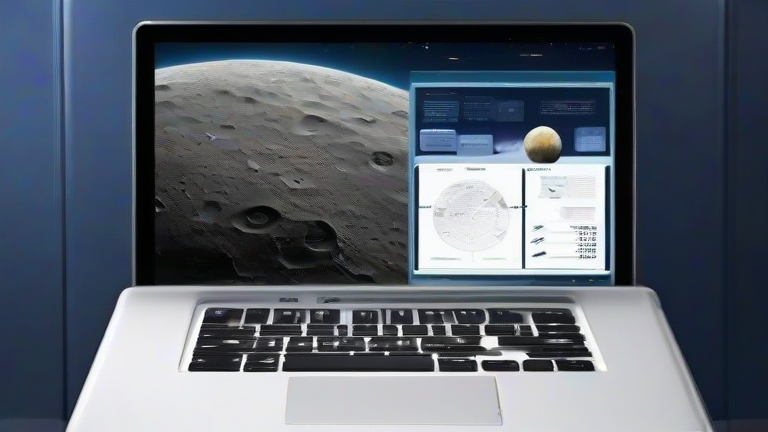
TL;DR: NASA’s extensive open-data initiatives are providing commercial space companies with critical historical telemetry and engineering benchmarks, significantly reducing the risk and cost associated with designing infrastructure for permanent lunar habitation. This symbiotic relationship accelerates the transition from short-term exploration to sustainable commercial settlements by leveraging proven scientific models for life support, radiation protection, and resource utilization.
The Commercial Lunar Economy
The landscape of space exploration is undergoing a seismic shift, moving from government-exclusive missions to a robust public-private partnership model. Central to this transformation is the strategic sharing of data from the National Aeronautics and Space Administration (NASA). For commercial entities aiming to establish living quarters, manufacturing hubs, or research outposts on the Moon, the cost of independent data collection is prohibitive. By accessing NASA’s archives, companies gain access to decades of validated information regarding lunar soil composition, thermal fluctuations, and radiation levels. This data serves as the foundational bedrock for engineering solutions that must withstand the harsh, vacuum-sealed environment of the lunar surface.
Strategic Insights for Infrastructure Development
Market analysis indicates that the primary barrier to lunar commercialization is not the launch capability, but the sustainability of long-term human presence. Strategies for lunar living hinge on In-Situ Resource Utilization (ISRU), particularly the extraction of water ice from permanently shadowed regions. NASA’s Lunar Crater Observation and Sensing Satellite (LCROSS) data provided the definitive proof of water ice existence, allowing private firms to pivot their R&D toward mining technologies. Furthermore, understanding the regolith’s abrasive nature, documented extensively by Apollo mission data, allows engineers to design durable habitats and rover tires that prevent catastrophic wear. Companies are now integrating these insights into predictive maintenance algorithms, ensuring that equipment longevity is maximized before the first crew arrives.
Case Studies in Collaboration
Consider the approach of leading private aerospace firms that have partnered with NASA’s Commercial Lunar Payload Services (CLPS) program. One notable example involves a startup focused on modular habitat construction. By utilizing NASA’s thermal analysis data from the Apollo missions, they were able to refine their insulation materials, ensuring that internal temperatures remain stable despite external swings from 127°C to -173°C. Another case study involves a telecommunications provider aiming to establish a lunar internet backbone. Leveraging NASA’s orbital mechanics data, they optimized the placement of relay satellites to ensure continuous coverage for surface dwellers, a critical factor for both safety and operational efficiency. These examples demonstrate how open data directly translates into viable business models, reducing development timelines by years and saving millions in redundant testing phases.
FAQ
Q: How does NASA data reduce costs for commercial space companies?
A: It eliminates the need for expensive initial data collection missions, allowing companies to rely on proven scientific findings for design and engineering.
If you want to dig deeper, check out our guide on Top 10 Tech Trends in 2024: What You Need to Know.
Q: What specific types of data are most valuable for lunar living?
A: Key data points include radiation levels, regolith composition, thermal cycles, and the precise location of water ice deposits.
Q: Can private companies use NASA data without direct government contracts?
A: Yes, much of NASA’s scientific data is publicly accessible through open data portals, enabling independent firms to utilize it for commercial planning.
Leave a Reply