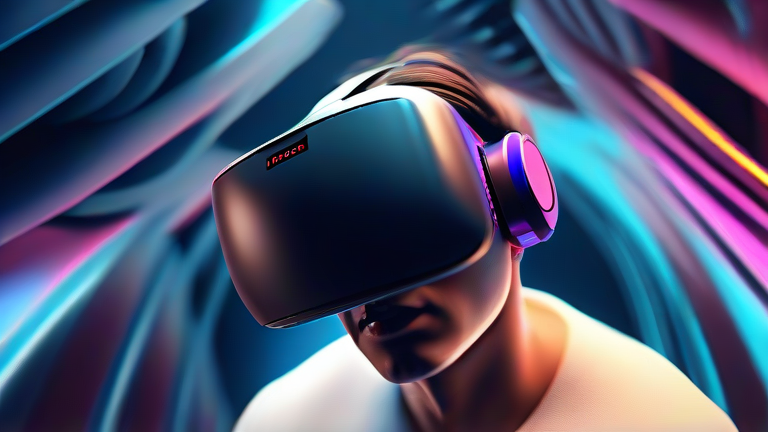
Metaverse Platforms Replace VR Headsets for Enterprise

The enterprise technology landscape is undergoing a seismic shift. For years, Virtual Reality (VR) headsets were the undisputed kings of immersive business training and virtual collaboration. However, recent developments suggest a pivotal change is underway: metaverse platforms are increasingly replacing dedicated VR headsets for mainstream corporate adoption. This transition is not about discarding immersion entirely, but rather about prioritizing accessibility, scalability, and cross-platform compatibility over high-fidelity hardware dependency.
The latest wave of metaverse platforms, such as Meta Horizon Workrooms, Microsoft Mesh, and Spatial, has introduced sophisticated browser-based interfaces that require only standard laptops, tablets, or smartphones. These platforms leverage WebGL and WebXR technologies to render 3D environments directly in the browser, eliminating the need for expensive, specialized hardware. This shift addresses one of the biggest barriers to enterprise VR adoption: cost and logistical complexity. IT departments no longer need to manage inventory, sanitize headsets, or troubleshoot hardware-specific connectivity issues. Instead, employees can join virtual meetings with a single click, fostering a more inclusive and flexible work environment.
From a technical specification standpoint, the new generation of metaverse platforms prioritizes lightweight client-side processing. While high-end VR headsets rely on powerful GPUs for rendering, these new platforms utilize cloud-computing solutions to handle heavy lifting. This ensures that even older enterprise devices can participate in 3D collaborative sessions without significant lag or performance degradation. Furthermore, advancements in spatial audio and avatar animation have reached a point where the user experience is sufficiently immersive, even without stereoscopic 3D vision. The focus has shifted from photorealistic graphics to functional interaction, allowing users to manipulate 3D models, whiteboards, and data visualizations with intuitive hand-tracking simulations or mouse inputs.
The industry impact of this transition is profound. Human Resources departments are reporting higher engagement rates in training modules that previously required bulky equipment. Sales teams are leveraging virtual showrooms that clients can access from anywhere in the world, breaking down geographical barriers that once limited face-to-face demonstrations. Moreover, the reduction in hardware costs allows companies to scale their digital transformation initiatives much faster. Small and medium-sized enterprises (SMEs), which previously could not afford VR infrastructure, are now
Leave a Reply