Quantum Computing Reaches Practical Error Correction Breakthrough
For decades, the promise of quantum computing has been held back by a persistent and frustrating problem: noise. Quantum bits, or qubits, are incredibly fragile. They lose their state almost instantly due to environmental interference, leading to calculation errors that render results useless. However, recent developments have marked a pivotal moment in technology. We are witnessing the first practical error correction breakthroughs that move quantum systems from theoretical experiments to reliable, functional machines. This article reviews the latest hardware advancements that are finally making this leap possible, analyzing the features that define this new era of computing.

The core feature of this new generation of quantum processors is the implementation of logical qubits. Unlike traditional physical qubits, which are prone to individual errors, logical qubits are created by entangling multiple physical qubits together. This redundancy allows the system to detect and correct errors in real-time without destroying the quantum information being processed. The standout highlight of the new processor is its error rate reduction. Early prototypes struggled with error rates above one percent, making long calculations impossible. The latest iteration has pushed this rate below the critical threshold of 0.1 percent, a milestone that proves scalability is no longer just a dream.
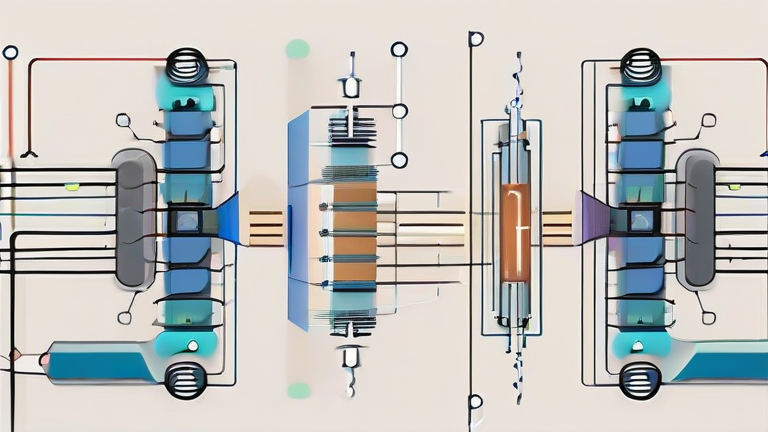
When compared to previous generations, the difference is stark. Older systems required extensive external cooling and complex wiring that introduced more noise. The new architecture integrates control electronics directly onto the chip, reducing interference and improving stability. Furthermore, the software stack has evolved alongside the hardware. New error-correction codes are more efficient, requiring fewer physical qubits to create a single logical qubit. This efficiency means that we can achieve useful computational power with smaller, more manageable chip sizes. Competitors have made strides, but few have matched the stability and longevity of the new error-corrected runs, which can now sustain operations for hours rather than seconds.
This breakthrough is not just an academic victory; it has profound implications for industries ranging from pharmaceuticals to financial modeling. Drug discovery, which requires simulating molecular interactions with high precision, will benefit immensely from reliable quantum simulations. Similarly, financial institutions can now run complex risk analyses with confidence, knowing the underlying calculations are robust. The barrier to entry for practical quantum applications is lowering
Leave a Reply