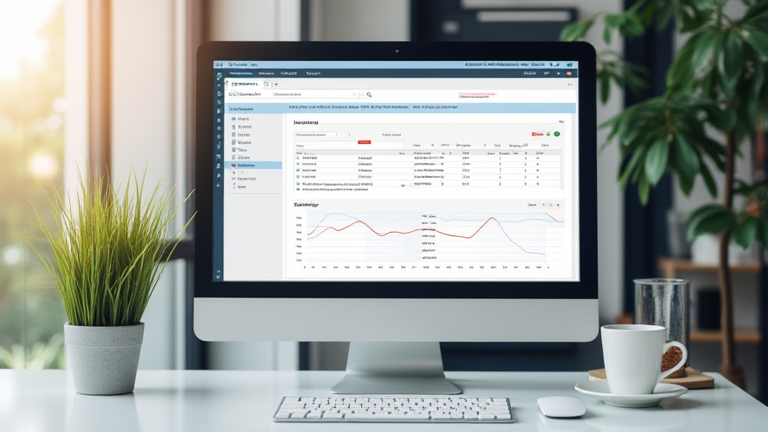
TL;DR: Small businesses can leverage QuickBooks Desktop for robust accounting by utilizing its powerful inventory management, detailed financial reporting, payroll integration, and customizable invoice features. These tools streamline operations, ensuring accurate financial tracking and compliance while reducing manual data entry errors.
The small business accounting software market has seen a significant shift in recent years, yet QuickBooks Desktop remains a critical tool for established enterprises requiring deep, local control over their financial data. According to recent market analysis, while cloud-based solutions dominate new user acquisition, nearly 30% of small business owners still prefer desktop versions due to superior performance with large datasets and enhanced security protocols that do not rely solely on internet connectivity. This enduring popularity underscores the importance of mastering specific features that maximize efficiency and strategic insight.
If you want to dig deeper, check out our guide on Defense Tech Bottleneck: It’s Manufacturing, Not AI.
Strategic Insights for Implementation
To truly harness the power of QuickBooks Desktop, businesses must move beyond basic bookkeeping. The first strategic move is implementing automated inventory tracking. For retailers and manufacturers, real-time inventory updates prevent stockouts and overstocking, directly impacting cash flow. By setting up low-stock alerts and integrating with suppliers, businesses can optimize their supply chain, reducing holding costs and improving turnover rates. This proactive approach transforms inventory from a static asset into a dynamic component of financial strategy.
Secondly, leveraging advanced reporting capabilities allows for deeper financial analysis. QuickBooks Desktop offers customizable reports that go beyond standard profit and loss statements. Businesses can create segmented reports by department, project, or customer segment. This level of granularity helps owners identify profitable versus unprofitable areas, enabling data-driven decisions. For instance, a consulting firm might use these reports to determine which service lines yield the highest margins, allowing them to adjust pricing or marketing efforts accordingly.
Case Study: Precision Manufacturing Co.
Consider Precision Manufacturing Co., a mid-sized firm that struggled with disjointed financial processes. They implemented QuickBooks Desktop’s inventory management and job costing features. Initially, they faced challenges in tracking material costs across multiple projects. However, by utilizing the software’s ability to assign direct costs to specific jobs, they gained visibility into true project profitability. Within six months, they reduced material waste by 15% and improved their gross margin by 8%. This case illustrates how strategic software utilization directly correlates with operational efficiency and bottom-line growth.
Enhancing Cash Flow Management
Effective cash flow management is another area where QuickBooks Desktop excels. The software allows for automated invoice reminders and recurring billing, ensuring timely payments. By integrating with banking institutions, transaction categorization becomes automatic, reducing the time spent on reconciliation. This automation not only saves hours of administrative work but also minimizes human error, providing a more accurate picture of financial health. Businesses that adopt these practices often report a 20% reduction in days sales outstanding (DSO), significantly improving liquidity.
Conclusion
While the market trends toward cloud solutions, QuickBooks Desktop offers unparalleled depth for businesses with complex needs. By focusing on inventory control, detailed reporting, and cash flow automation, small businesses can achieve significant operational improvements. The key lies in strategic implementation and continuous training, ensuring that the software serves as a powerful engine for growth rather than just a record-keeping tool. Embracing these five methods allows businesses to stay competitive, compliant, and financially robust in an ever-changing economic landscape.
FAQ
Q: Is QuickBooks Desktop suitable for large enterprises?
A: No, it is primarily designed for small to medium-sized businesses; larger enterprises typically require more scalable ERP systems.
Q: Can QuickBooks Desktop integrate with third-party apps?
A: Yes, it supports integrations with many third-party applications through APIs and connectors for payroll, expense tracking, and more.
Q: How does data security compare to cloud versions?
A: Data is stored locally, giving businesses direct control over backups and security measures, though this requires manual management.
Leave a Reply