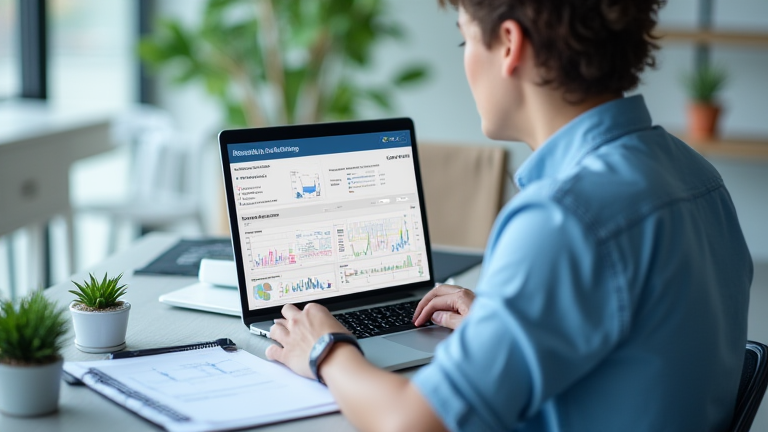
TL;DR: Cloud accounting software automates small business bookkeeping by seamlessly integrating with bank feeds, credit cards, and third-party applications to eliminate manual data entry and reduce human error. This real-time synchronization allows business owners to access accurate financial data instantly, enabling faster decision-making and freeing up valuable time for strategic growth activities rather than administrative tasks.
Market Analysis and Strategic Insights
The global cloud accounting software market has experienced explosive growth, driven by the increasing demand for digital transformation among small and medium-sized enterprises (SMEs). According to recent industry reports, the market is projected to grow at a compound annual growth rate (CAGR) of over twelve percent through the next decade. This surge is largely attributed to the rising need for real-time financial visibility, remote work capabilities, and enhanced data security. Businesses are no longer viewing accounting software as a mere compliance tool but as a strategic asset that drives operational efficiency. Key strategies for adoption include selecting platforms with robust API ecosystems, ensuring seamless integration with existing customer relationship management (CRM) and enterprise resource planning (ERP) systems, and prioritizing user-friendly interfaces that require minimal training. Companies that fail to modernize their bookkeeping processes risk falling behind competitors who leverage automated insights for better cash flow management and predictive analytics.
If you want to dig deeper, check out our guide on 10 Essential Health Tips for a Longer, Happier Life.
Case Studies in Automation
Consider the case of a regional retail chain that struggled with manual invoice processing. By implementing cloud-based accounting solutions, they automated accounts payable and receivable workflows. The system automatically matched purchase orders with invoices, flagging discrepancies for review while approving standard transactions instantly. This reduced their month-end closing time from ten days to just three. Another example involves a digital marketing agency that integrated their invoicing software with their project management tool. This connection allowed them to automatically generate invoices based on billable hours tracked in real-time, significantly improving their cash flow and reducing late payments by forty percent. These successes highlight how automation transforms administrative burdens into streamlined, error-free processes.
FAQ
Q: Is cloud accounting software secure for sensitive financial data?
A: Yes, reputable providers use bank-level encryption, multi-factor authentication, and regular security audits to ensure data protection and compliance with global standards.
Q: Can cloud accounting software integrate with my existing banking institution?
A: Most major platforms support direct bank feeds through secure APIs, allowing automatic synchronization of transactions from thousands of financial institutions worldwide.
Q: How does automation reduce errors in bookkeeping?
A: Automation eliminates manual data entry, which is the primary source of human error, by automatically pulling transaction data from banks and matching it with invoices and receipts.
Leave a Reply