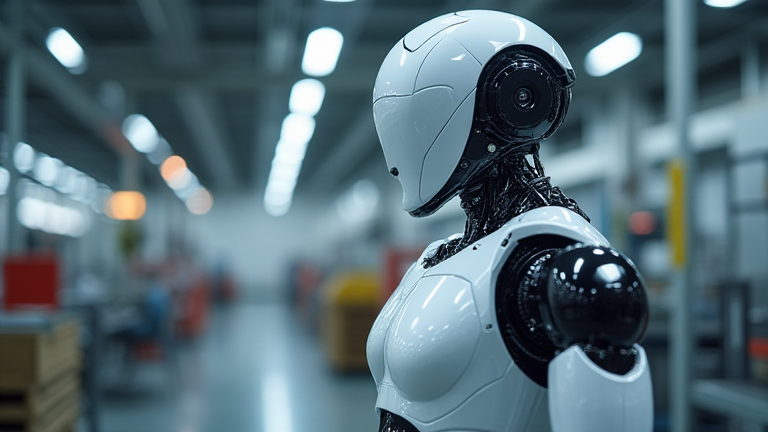
TL;DR: Humanoid robots cannot currently beat industrial robots in raw speed or cost-efficiency for repetitive tasks. However, they offer superior flexibility and adaptability for dynamic, unstructured environments where traditional arms fail.
The manufacturing floor is undergoing a silent revolution. For decades, the image of automation was the rigid, bolted-down industrial arm. These machines are the undisputed kings of the assembly line, capable of moving a car part from point A to point B with sub-millimeter precision at speeds that human eyes cannot track. Their programming is fixed, their reach is limited, and their setup time can take days. Yet, a new contender has entered the arena: the humanoid robot. These bipedal, dexterous machines promise to mimic human movement, potentially bridging the gap between fixed automation and human labor. The question remains: can they truly beat their industrial counterparts?
If you want to dig deeper, check out our guide on Buy Hand Soap Refills: Easy Way to Save Money.
Feature Highlights of Humanoid Robots
Humanoid robots, such as the latest iterations from major tech firms, are designed with human-like proportions. This is not for aesthetics; it is for utility. They possess two arms with five-fingered hands, allowing for complex manipulation of tools and objects without requiring the workspace to be redesigned for robotic access. Their mobility is another key feature. Unlike stationary industrial arms, humanoids can navigate existing factory layouts, walking between stations and climbing stairs. They are built to work in spaces designed for humans, making retrofitting significantly less expensive than installing new robotic infrastructure. Furthermore, their AI-driven perception systems allow them to learn from demonstration, adapting to minor variations in part orientation without complex reprogramming.
The Comparison: Specialization vs. Generalization
When comparing humanoid robots to industrial robots, the trade-offs are stark. Industrial robots win decisively on throughput and reliability. An industrial arm can perform the same weld ten thousand times a day with zero variance and minimal downtime. They are also significantly cheaper per unit of labor displaced, often paying for themselves within eighteen months. Humanoid robots, conversely, are currently expensive, power-hungry, and slower. A humanoid may take three seconds to pick a part, whereas an industrial robot might do it in 0.5 seconds. However, the industrial robot requires a dedicated fixture for that part. If the part changes, the fixture must change, requiring engineering time and cost. The humanoid simply adjusts its grip. In dynamic environments where products change frequently, or in maintenance tasks that require climbing ladders or entering tight spaces, humanoids hold a distinct advantage. They are generalists, while industrial robots are specialists.
Ultimately, humanoid robots will not replace industrial robots on high-volume production lines any time soon. Instead, they will complement them. They will handle the messy, variable, and physically demanding tasks that industrial arms cannot perform. The future of the factory is not one or the other, but a hybrid ecosystem where each type of robot performs the tasks for which it is best suited. For now, the industrial robot remains the backbone of manufacturing, but the humanoid is the key to unlocking new levels of flexibility in a changing market.
Are you ready to integrate flexible automation into your facility? Contact our team today for a free assessment of how hybrid robotics can transform your production line.
FAQ
Q: Are humanoid robots safer than industrial robots?
A: Generally, yes, because they are designed to work alongside humans in shared spaces, featuring advanced collision detection and force-limiting joints that industrial robots typically lack in collaborative settings.
Q: How much does a humanoid robot cost compared to an industrial arm?
A: Humanoid robots are currently significantly more expensive, often costing hundreds of thousands of dollars, whereas a standard industrial arm may cost between twenty and fifty thousand dollars depending on specifications.
Q: Can humanoid robots operate 24/7 like industrial robots?
A: They can operate continuously, but their batteries may require charging cycles, and their complex AI systems may need periodic maintenance and software updates more frequently than the simpler industrial counterparts.
Leave a Reply