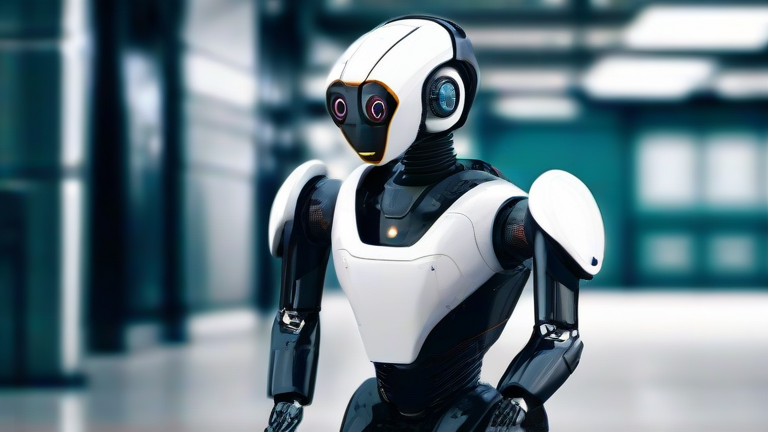
Will Humanoid Robots Replace Industrial Robots in Factories?
TL;DR: No, humanoid robots will not replace traditional industrial robots in the near term because fixed-arm systems remain superior for high-speed, repetitive tasks. Instead, humanoids will complement existing automation by handling non-structured environments and tasks requiring dexterity that fixed robots cannot achieve.
The Rise of General Purpose Robotics
The manufacturing landscape is undergoing a significant shift as companies like Tesla, Figure, and Agility Robotics introduce advanced humanoid platforms. Unlike traditional industrial arms that are bolted to the floor and optimized for a single, repetitive motion, humanoids are designed for mobility and general-purpose duality. Recent developments have focused on improving battery life, enhancing sensory fusion, and refining motor control to mimic human-like movement. These machines are no longer just experimental prototypes; they are entering pilot programs in automotive and logistics sectors, proving that they can navigate complex factory floors without extensive retooling.
If you want to dig deeper, check out our guide on Top 10 AI Productivity Apps to Boost Your Workflow.
Technical Specifications and Capabilities
Modern humanoid robots feature sophisticated hardware stacks that enable them to interact safely with human workers. Key specifications include high-torque actuators that allow for a lifting capacity of up to 100 kilograms, comparable to the average human worker. They utilize LiDAR, depth cameras, and force-sensing touch interfaces to navigate dynamic environments. For instance, Figure 01 boasts 35 degrees of freedom, allowing for precise hand manipulation similar to a human hand. This level of dexterity is critical for tasks such as sorting mixed parts, assembling delicate components, or operating standard tools designed for human use. Furthermore, these robots integrate large language models (LLMs) to understand natural language commands, reducing the programming burden on engineers and allowing for easier task reassignment.
Industry Impact and Economic Implications
The economic impact of introducing humanoids is profound. Traditional automation requires expensive, custom fixtures for every new product line. Humanoids eliminate this need by using the existing factory infrastructure, including ladders, stairs, and standard workstations. This flexibility reduces capital expenditure and accelerates the return on investment for manufacturers dealing with short product lifecycles. However, the cost per unit remains high, ranging from hundreds of thousands to millions of dollars. As production scales up and supply chains for components like lithium batteries and precision gears mature, prices are expected to drop, making them viable for small and medium-sized enterprises. The primary value proposition is not speed, but adaptability. While a robotic arm can weld a car door faster than a human, it cannot move to a different station to pack boxes without significant downtime. Humanoids bridge this gap, offering a flexible workforce that can switch roles throughout the day, addressing labor shortages and improving overall operational efficiency in non-structured environments.
FAQ
Q: Are humanoid robots safer than traditional industrial robots?
A: Yes, they are generally safer in shared spaces because they are designed with soft robotics and advanced collision detection, allowing them to work alongside humans without heavy safety cages.
Q: Can humanoids perform tasks faster than industrial robots?
A: No, for high-speed repetitive tasks like stamping or welding, fixed industrial robots are faster and more energy-efficient, while humanoids excel in flexible, multi-step processes.
Q: How much does a typical industrial humanoid robot cost?
A: Current prices range from $200,000 to over $2 million depending on the model and features, though costs are expected to decrease significantly as mass production ramps up.
Leave a Reply