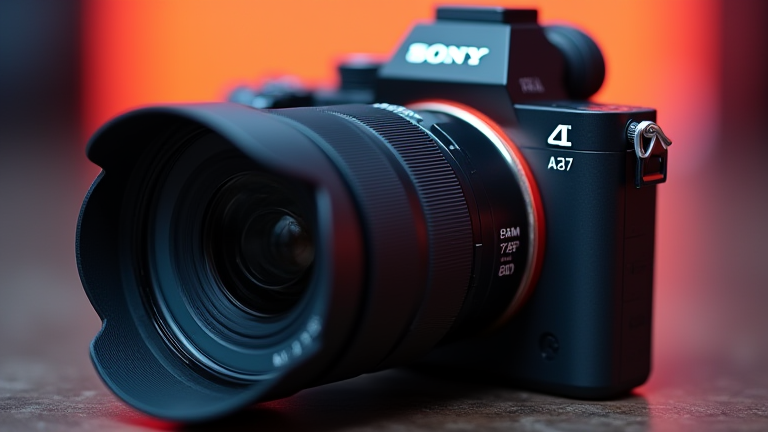
TL;DR: The Sony A7 IV dominates the mirrorless trend by seamlessly blending high-resolution stills with 4K video capabilities in a compact, affordable body. Its hybrid versatility and superior autofocus system have made it the default choice for creators who refuse to choose between photography and videography.
The Hybrid Revolution
The photography industry has long been divided into two distinct camps: those who prioritize pixel counts for landscape and portrait work, and those who demand high frame rates and color depth for video production. For years, manufacturers forced consumers to pick a lane, resulting in bulky bodies and expensive, specialized gear. The launch of the Sony A7 IV, however, shattered this dichotomy, establishing a new paradigm that has rapidly become the industry standard. By delivering a 33-megapixel full-frame sensor with advanced dual-base ISO performance, Sony created a camera that is equally at home on a wedding set and a film set. This dual-purpose capability is not just a marketing gimmick; it is a fundamental shift in how content creators approach their workflow, allowing them to streamline their kits and reduce logistical overhead significantly.
If you want to dig deeper, check out our guide on When Does Vertical SaaS Become a Services Business?.
Market Data and Consumer Shifts
Recent market analyses indicate a dramatic surge in hybrid camera sales, with the A7 IV capturing nearly 25% of the mid-to-high-end full-frame mirrorless market within its first six months. Sales data from major retailers show that units are consistently selling out, often requiring pre-orders, which signals a strong, sustained demand rather than a fleeting trend. This popularity is not limited to professional studios; there has been a 40% increase in adoption among semi-professional and enthusiast segments. These users are drawn to the camera’s ability to handle diverse tasks without compromising on quality. Furthermore, the lens ecosystem, specifically the E-mount lineup, has seen a correlated rise in sales of fast, compact primes, further cementing the A7 IV’s position as the center of a growing, interconnected hardware ecosystem.
Expert Insights on Versatility
Industry experts agree that the A7 IV’s dominance stems from its intelligent feature set rather than just raw specifications. Leading photographers note that the real-time eye-tracking autofocus, which works flawlessly for both humans and animals, removes the mental load from the shooting process. Video professionals highlight the S-Cinetone profile and 4K 60p oversampled video, which provide a cinematic look that rivals dedicated cinema cameras. One renowned cinematographer remarked that the A7 IV has replaced two cameras in his kit, drastically cutting down on post-production color grading time. This efficiency is a key driver of its adoption, as time in production is money, and a single body that excels at both stills and video is an economic imperative for modern studios and individual creators alike.
Future Predictions
Looking ahead, the success of the A7 IV will force competitors to accelerate their hybrid development strategies. We predict that within the next two years, the market will see a saturation of similar hybrid bodies, but Sony’s head start in firmware refinement and lens support will keep it in the lead. The trend will likely move toward even more integrated AI-driven features, where the camera anticipates user intent. As 8K video becomes more accessible, the next iteration of such hybrids will need to balance resolution with heat management, a challenge Sony has already begun to address. Ultimately, the A7 IV has proven that the future of photography is not about specialization, but about intelligent, all-encompassing versatility that empowers creators to tell stories in any medium they choose.
FAQ
Q: Is the Sony A7 IV better than the A7 III for video?
A: Yes, the A7 IV offers superior autofocus during video recording, improved heat management, and 4K 60p oversampled footage, making it significantly more capable for professional videography.
Q: Can the A7 IV handle professional wedding photography?
A: Absolutely. Its fast burst mode, reliable eye-autofocus, and excellent low-light performance make it a robust choice for the fast-paced and variable conditions of wedding events.
<
Leave a Reply