Category: Uncategorized

  • CRISPR Therapies Gain FDA Approval for Rare Diseases

    CRISPR Therapies Gain FDA Approval for Rare Diseases

    CRISPR Therapies Gain FDA Approval for Rare Diseases

    The landscape of modern medicine has shifted irrevocably with the recent cascade of FDA approvals for CRISPR-based therapies. This milestone marks the transition from experimental gene editing to clinically viable treatments for previously incurable rare diseases. For decades, patients with conditions like sickle cell disease and beta-thalassemia relied on lifelong management strategies that rarely offered a cure. Now, for the first time, a single treatment can potentially eradicate the root cause of these genetic disorders by precisely altering the patient’s own DNA.

    Latest Developments and Clinical Specifications

    The recently approved therapies, notably Casgevy (exagamglogene autotemcel), represent a breakthrough in ex vivo gene editing. The technical specifications of this treatment are rigorous and complex. The process begins with the collection of the patient’s hematopoietic stem cells via apheresis. These cells are then transported to a specialized manufacturing facility where the CRISpr-Cas9 system is used to cut the DNA at a specific locus within the BCL11A gene enhancer. This disruption allows for the reactivation of fetal hemoglobin production, which compensates for the defective adult hemoglobin.

    Clinical trials have demonstrated remarkable efficacy. In pivotal studies, the vast majority of participants with severe sickle cell disease remained free of severe pain crises for at least twelve consecutive months. Similarly, patients with transfusion-dependent beta-thalassemia showed the ability to produce sufficient functional hemoglobin to avoid regular blood transfusions. The safety profile has been monitored closely, with short-term risks including myeloablative conditioning side effects, but long-term data continues to support the viability of the approach.

    Industry Impact and Future Outlook

    The regulatory green light has sent shockwaves through the biotechnology sector. Investors are rushing to fund companies capable of scaling up the complex manufacturing processes required for personalized gene therapies. The success of


    Related Articles

  • 10 Tech Trends Shaping 2026: What You Need to Know

    10 Tech Trends Shaping 2026: What You Need to Know

    10 Tech Trends Shaping 2026: What You Need to Know

    The technology landscape in 2026 is defined by rapid acceleration and unprecedented integration. From generative AI to sustainable hardware, the innovations emerging this year are not merely incremental updates but fundamental shifts in how we interact with digital ecosystems. Understanding these developments is crucial for professionals, investors, and everyday users alike. Below, we explore the critical trends defining this pivotal year.

    Generative AI Goes Mainstream

    Generative AI has moved beyond experimental phases into robust enterprise deployment. Models are now smaller, more efficient, and capable of running locally on devices. This shift enhances privacy and reduces latency, allowing real-time processing without cloud dependency. Companies are integrating these models into customer service, coding assistants, and creative workflows, fundamentally altering productivity metrics across industries.

    If you want to dig deeper, check out our guide on Top 10 Tech Trends Shaping 2026: What You Need to Know.

    The Rise of Edge Computing

    As data volumes explode, edge computing becomes essential. By processing data closer to the source, organizations reduce bandwidth costs and improve response times. In 2026, we see significant adoption in autonomous vehicles and smart manufacturing, where milliseconds matter. This decentralization complements cloud infrastructure, creating a hybrid model that offers both scalability and speed.

    Quantum Computing Breakthroughs

    While still emerging, quantum computing has achieved new milestones in error correction and qubit stability. Major tech giants are investing billions to achieve quantum advantage for specific use cases, such as drug discovery and financial modeling. Although widespread commercial availability remains years away, recent prototype demonstrations suggest that practical applications are nearer than previously thought.

    Sustainable Tech Innovation

    Environmental concerns are driving hardware innovation. Manufacturers are prioritizing energy-efficient processors and recyclable materials. New battery technologies promise longer life spans and faster charging, addressing one of the biggest pain points for mobile users. Regulatory pressures are also pushing companies to adopt circular economy principles, reducing e-waste and carbon footprints across the supply chain.

    Advanced Cybersecurity Measures

    With digital threats growing more sophisticated, zero-trust architecture is becoming the standard. Biometric authentication

    Related Articles

  • 10 Proven Business Growth Strategies for 2026

    10 Proven Business Growth Strategies for 2026

    10 Proven Business Growth Strategies for 2026

    The business landscape in 2026 is defined by rapid technological advancement and shifting consumer behaviors. Organizations must adapt quickly to survive and thrive. This article explores ten proven strategies that leaders can implement to drive sustainable growth. By combining data-driven insights with innovative approaches, companies can navigate uncertainty and capitalize on emerging opportunities.

    Market Analysis: The New Normal

    Current market analysis reveals a significant shift towards digital-first interactions. Consumers now expect seamless, personalized experiences across all touchpoints. According to recent industry reports, businesses that fail to integrate artificial intelligence into their customer service operations risk losing up to thirty percent of their potential revenue. Furthermore, the rise of remote work has expanded the talent pool, allowing companies to hire globally. This decentralization requires new management strategies focused on output rather than hours worked. Economic volatility also demands agile financial planning, where cash flow management takes precedence over aggressive expansion. Understanding these macroeconomic trends is crucial for setting realistic growth targets and allocating resources effectively.

    If you want to dig deeper, check out our guide on Real-Time Biometric Data in Mental Health Apps.

    Core Growth Strategies

    First, leverage data analytics to personalize marketing campaigns. Personalization increases conversion rates by up to twenty percent. Second, invest in employee upskilling to bridge the skills gap caused by rapid technological changes. Third, adopt a subscription-based model to ensure recurring revenue streams, which provide financial stability. Fourth, expand into emerging markets where competition is less intense. Fifth, optimize your supply chain for resilience, reducing dependency on single suppliers. Sixth, enhance customer retention through loyalty programs that offer genuine value. Seventh, utilize social proof and user-generated content to build trust. Eighth, implement automated workflows to reduce operational costs. Ninth, focus on sustainability to appeal to eco-conscious consumers. Tenth, foster a culture of innovation where employees are encouraged to experiment and fail fast.

    Case Studies in Success

    Consider the case of TechFlow Solutions, a mid-sized software provider. By implementing strategy number one, they used AI to tailor their email marketing, resulting in a forty-five percent increase in open rates.

    Related Articles

  • How Quantum Computing Breaks Bank Encryption Standards

    How Quantum Computing Breaks Bank Encryption Standards

    How Quantum Computing Breaks Bank Encryption Standards

    The financial sector stands on the precipice of a technological paradigm shift. For decades, the integrity of global banking systems has relied on the computational difficulty of factoring large prime numbers—a problem that classical computers struggle to solve within a human lifetime. However, the advent of quantum computing threatens to dismantle this foundation. With quantum bits, or qubits, capable of existing in multiple states simultaneously, algorithms like Shor’s algorithm can theoretically break RSA and ECC encryption protocols in hours rather than millennia. This is not merely a theoretical concern; it is an imminent industrial reality that requires immediate strategic action.

    Market data underscores the urgency of this transition. According to a recent report by McKinsey & Company, the global quantum computing market is projected to reach $850 million by 2026, with financial services accounting for nearly 30% of early adoption investments. Banks are not waiting for the technology to mature; they are already allocating substantial budgets to Quantum-Safe Cryptography (QSC). The “harvest now, decrypt later” threat is particularly alarming. Adversaries are currently intercepting and storing encrypted financial data, knowing that once large-scale quantum computers become available, this archived information will be easily decrypted. This means that sensitive transaction logs, customer identities, and inter-bank transfer records collected today are already at risk.

    If you want to dig deeper, check out our guide on Urban Farming Reduces City Food Miles: Benefits & Guide.

    Expert insights highlight a critical gap between current infrastructure and future readiness. Dr. Elena Rostova, a leading cryptographer at the Institute for Advanced Financial Technology, notes, “Most banking legacy systems were built with security parameters that will be obsolete within the next decade. The migration to post-quantum cryptography is not just a software update; it is a complete architectural overhaul.” She emphasizes that the complexity lies in the interoperability of these new standards with existing financial networks. The transition requires not only new algorithms but also a re-evaluation of key management practices, hardware security modules, and cloud infrastructure protocols.

    Future predictions suggest that the first decade of the 2030s will see a bif

    Related Articles

  • How Vertical Farming Scales to Meet Urban Food Demand

    How Vertical Farming Scales to Meet Urban Food Demand

    How Vertical Farming Scales to Meet Urban Food Demand

    As metropolitan populations swell and arable land shrinks, the traditional model of agriculture faces an existential crisis. Enter vertical farming, a revolutionary approach that stacks crops in controlled environments to maximize yield per square foot. This review examines leading scalable vertical farming systems, analyzing their efficiency, technology integration, and real-world applicability for urban centers striving for food security.

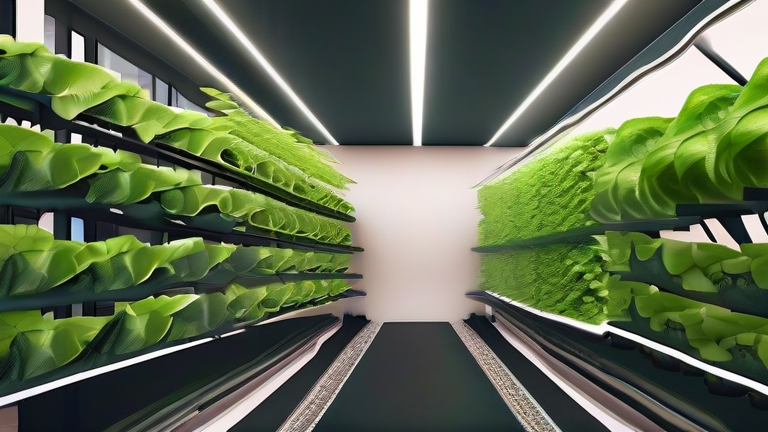
    Interior view of a modern vertical farm with LED lights and stacked plant trays

    If you want to dig deeper, check out our guide on VR Therapy in Mental Wellness Apps: The Future of Care.

    Feature Highlights of Modern Systems

    Top-tier vertical farming units distinguish themselves through advanced hydroponic and aeroponic technologies. Key features include automated nutrient delivery systems that ensure precise chemical balance, reducing water usage by up to ninety-five percent compared to conventional farming. Integrated LED lighting arrays offer customizable spectrums, allowing farmers to manipulate plant growth cycles and nutrient density. Furthermore, cloud-connected monitoring dashboards provide real-time data on temperature, humidity, and plant health, enabling remote management and predictive maintenance. These systems are designed for modularity, allowing urban operators to expand capacity incrementally as demand grows, making them ideal for retrofitting unused urban spaces like warehouses or basements.

    Comparative Analysis: Vertical vs. Traditional

    When compared to traditional field agriculture, vertical farming offers distinct advantages in consistency and land efficiency. Traditional farming is subject to weather volatility, pests, and seasonal limitations, leading to unpredictable yields. In contrast, vertical farms operate in sterile, controlled environments, producing pesticide-free crops year-round with predictable harvest schedules. While the initial capital expenditure for vertical infrastructure is higher, the operational savings from reduced water, labor, and transportation costs often offset these expenses within three to five years. Additionally, the proximity to urban consumers drastically cuts down on food miles, ensuring fresher produce and a lower carbon footprint.

    Real-World Scalability and Challenges

    Scalability remains the primary hurdle. While pilot projects demonstrate success, large-scale deployment requires significant energy investment for lighting and climate control. However, advancements in renewable energy integration and energy-efficient LED technology are rapidly mitigating these concerns. Successful implementations in cities like Singapore and New York prove that vertical farming can effectively

    Related Articles

  • 7 Simple Lifestyle Hacks to Boost Your Daily Happiness

    7 Simple Lifestyle Hacks to Boost Your Daily Happiness

    7 Simple Lifestyle Hacks to Boost Your Daily Happiness

    In our fast-paced modern world, the pursuit of happiness often feels like chasing a mirage. We wait for promotions, vacations, or major life milestones to feel truly content. However, true well-being is rarely found in grand gestures; it is cultivated in the quiet, consistent moments of our daily routine. By integrating small, manageable changes into your lifestyle, you can significantly enhance your mental clarity and emotional resilience. Here are seven simple hacks to help you cultivate joy, grounded in travel, food, culture, and personal growth.

    First, embrace the art of the “micro-adventure.” You do not need a plane ticket to explore new cultures. Dedicate one hour a week to exploring a neighborhood you have never visited. Look for local art installations, visit a small independent bookstore, or try a cuisine from a culture you know little about. This exposure to novelty stimulates the brain and breaks the monotony of routine, fostering a sense of wonder and curiosity that is essential for personal growth.

    Second, practice mindful eating. In an era of quick takeout and distracted scrolling, we often forget to taste our food. Choose one meal a day to eat slowly, without screens. Focus on the textures, aromas, and flavors. This practice not only improves digestion but also grounds you in the present moment, reducing anxiety and increasing appreciation for simple pleasures. It is a form of edible meditation that connects you to the effort and culture behind your sustenance.

    Third, curate your digital environment. Your feed is your cultural diet. Unfollow accounts that trigger comparison or inadequacy. Instead, follow creators who inspire creativity, teach new skills, or share diverse cultural perspectives. A positive digital landscape reduces stress and provides a steady stream of inspiration, turning your downtime into a learning opportunity.

    Fourth, establish a “gratitude anchor.” Before bed, write down three specific things that brought you joy that day. They can be as small as a warm shower or as significant as a kind conversation. This habit rewires your brain to scan for positivity rather than threats, fundamentally shifting your perspective on life.

    Fifth, incorporate movement that feels like play, not punishment. Whether it is dancing in your living

    Related Articles

  • Top 5 Design Trends Reshaping Your Industry in 2026

    Top 5 Design Trends Reshaping Your Industry in 2026

    Top 5 Design Trends Reshaping Your Industry in 2026

    The landscape of digital and physical design is undergoing a seismic shift. As we navigate through 2026, the convergence of artificial intelligence, sustainability mandates, and evolving user behaviors is forcing brands to rethink their visual identities and user experiences. According to recent market analysis, the global design technology market is projected to reach $12 billion by the end of the year, driven largely by the demand for adaptive, intelligent, and ethically conscious design solutions. This surge is not merely aesthetic; it is a strategic necessity for survival in an increasingly saturated marketplace.

    First on our list is the rise of AI-Generated Personalization. No longer just a buzzword, AI-driven design tools are now capable of creating thousands of unique layout variations tailored to individual user preferences in real-time. Experts at the Global Design Institute note that brands utilizing dynamic AI design see a 35% increase in user engagement compared to static counterparts. This trend moves beyond simple A/B testing, offering a truly bespoke experience for every visitor, thereby blurring the line between generic branding and personal connection.

    If you want to dig deeper, check out our guide on EU Mandates Full AI Transparency by Mid-2026.

    Secondly, Radical Transparency and Ethical Visuals are becoming paramount. Consumers are increasingly scrutinizing the origins and impacts of the products they buy. Designers are responding by incorporating visible data visualizations that showcase supply chain ethics and carbon footprints directly into the user interface. This “honest design” approach builds trust and loyalty, transforming compliance from a backend requirement into a frontend marketing asset. It is no longer enough to say you are sustainable; your design must prove it.

    Thirdly, we are witnessing the Decline of Flat Design and the Rise of Spatial UI. With the advent of mixed reality headsets and more powerful mobile processors, interfaces are gaining depth. Subtle shadows, layered elements, and 3D interactions are creating immersive environments that mimic physical touch. This spatial awareness makes digital interfaces feel more intuitive and grounded, reducing cognitive load by leveraging our natural understanding of physical space.

    Fourth, Neo-Brutalism

    Related Articles

  • VR Therapy in Mental Wellness Apps: The Future of Care

    VR Therapy in Mental Wellness Apps: The Future of Care

    VR Therapy in Mental Wellness Apps: The Future of Care

    The landscape of mental healthcare is undergoing a seismic shift, moving away from traditional talk therapy alone and embracing immersive digital experiences. Virtual Reality (VR) is no longer just a tool for gaming; it has emerged as a potent therapeutic instrument within mental wellness applications. This convergence of technology and psychology offers patients a safe, controlled environment to confront fears, practice coping mechanisms, and engage in exposure therapy with unprecedented efficacy. As the stigma surrounding mental health continues to dissolve, the integration of VR into mainstream wellness apps marks a pivotal moment in the democratization of high-quality therapeutic resources.

    Recent market analyses underscore the rapid acceleration of this sector. The global virtual reality in healthcare market is projected to reach approximately $8.6 billion by 2027, growing at a compound annual growth rate (CAGR) of 32.4%. A significant portion of this growth is driven by mental health applications. Leading wellness platforms are now incorporating VR modules to address anxiety disorders, PTSD, and phobias. For instance, clinical trials have demonstrated that VR exposure therapy can reduce symptoms of post-traumatic stress disorder by up to 60% in some patient groups, outperforming traditional methods in certain contexts. These statistics highlight not just commercial viability, but clinical superiority in specific therapeutic areas.

    If you want to dig deeper, check out our guide on Remote Work Mandates Hybrid Office Returns.

    Experts emphasize that the core advantage of VR lies in its ability to provide “presence.” Dr. Elena Rodriguez, a clinical psychologist specializing in digital therapeutics, notes, “VR allows patients to experience their anxiety triggers in a way that feels real, yet remains completely safe. This cognitive dissonance is where healing happens. The brain processes the virtual threat similarly to a real one, allowing for genuine desensitization.” This insight suggests that VR apps are not merely supplements but essential tools for modern cognitive behavioral therapy. Furthermore, the accessibility of standalone VR headsets has lowered the barrier to entry, making these experiences available in clinics and, increasingly, in the comfort of patients’ homes.

    Looking ahead, the

    Related Articles

  • Top 5 Design Trends to Watch in 2026

    Top 5 Design Trends to Watch in 2026

    Top 5 Design Trends to Watch in 2026

    The landscape of digital and physical design is undergoing a profound transformation in 2026. Driven by rapid advancements in artificial intelligence, shifting consumer values toward sustainability, and the maturation of spatial computing, designers are redefining the boundaries of aesthetics and functionality. According to recent market analysis by Statista, the global design software market is projected to reach $13.8 billion by the end of this year, signaling robust investment in creative tools that support these emerging methodologies. This article explores the five most influential trends shaping the industry this year, offering insights for professionals and brands looking to stay ahead of the curve.

    Abstract visualization of AI-generated design patterns

    If you want to dig deeper, check out our guide on Remote Work Mandates Hybrid Office Returns.

    1. AI-Generated Personalization at Scale

    Artificial Intelligence has moved beyond mere assistance to become a co-creator. Generative AI tools are now enabling hyper-personalized user experiences in real-time. “We are seeing a shift from static templates to dynamic, algorithmically generated layouts that adapt to individual user behavior,” notes Sarah Chen, a lead UX strategist at FutureScale Labs. This trend allows brands to deliver unique visual narratives to each visitor, significantly boosting engagement rates. However, experts caution that maintaining brand consistency remains a challenge, requiring new governance frameworks for AI-generated assets.

    2. Sustainable and Circular Design

    Sustainability is no longer a niche preference but a market imperative. Consumers increasingly demand products and digital experiences that reflect ethical values. This has given rise to “circular design,” where materials and digital assets are created with end-of-life recycling or reuse in mind. The World Economic Forum reports that 66% of global consumers are willing to pay more for sustainable goods, pushing design teams to prioritize eco-friendly palettes, minimalist structures, and energy-efficient digital architectures that reduce carbon footprints.

    3. The Rise of Spatial UI

    With the advent of mixed-reality headsets, user interfaces are escaping the two-dimensional screen. Spatial UI design focuses on depth, gesture control, and contextual awareness. Designers are learning to navigate three-dimensional spaces, creating interfaces that feel native to physical environments.

    Related Articles

  • Urban Vertical Farming: Reducing Food Miles & Boosting Sustainability

    Urban Vertical Farming: Reducing Food Miles & Boosting Sustainability

    Urban Vertical Farming: Reducing Food Miles & Boosting Sustainability

    As global populations surge and arable land shrinks, the traditional agricultural model is facing unprecedented strain. Enter urban vertical farming, a revolutionary approach that reimagines food production by stacking crops in controlled, indoor environments. This method not only maximizes yield per square foot but also drastically cuts “food miles”—the distance food travels from farm to plate. By locating farms within city limits, vertical agriculture addresses critical logistics challenges while offering a sustainable solution to modern food security issues.

    The market for vertical farming is expanding rapidly, driven by consumer demand for locally sourced, pesticide-free produce. According to recent industry reports, the global vertical farming market is projected to reach billions of dollars by the end of the decade. This growth is fueled by technological advancements in LED lighting, hydroponics, and AI-driven climate control. Investors are increasingly recognizing the scalability of these systems, which offer predictable yields regardless of external weather conditions. However, high initial capital expenditure and energy costs remain significant barriers to entry, requiring strategic financial planning and innovative operational models.

    If you want to dig deeper, check out our guide on EV Charging Infrastructure Booms: The Future of Green Energy.

    Strategic Insights for Growth

    For businesses entering this sector, success hinges on optimizing energy efficiency and supply chain integration. A key strategy involves partnering with local retailers and restaurants to ensure immediate distribution, thereby minimizing waste and maximizing freshness. Companies must also invest in renewable energy sources, such as solar or wind, to mitigate the high electricity demands of artificial lighting. Furthermore, leveraging data analytics to fine-tune growing conditions can enhance crop quality and reduce resource consumption, creating a competitive advantage in an increasingly crowded market.

    Case Studies in Innovation

    Several pioneering companies illustrate the potential of this model. AeroFarms, based in Newark, New Jersey, operates one of the world’s largest indoor farms. By using aeroponic technology, they consume 95% less water than traditional field farming and produce year-round crops without soil. Their strategic location allows them to supply fresh greens to major metropolitan areas, significantly reducing transportation emissions. Similarly, Bowery Farming in New York has integrated advanced robotics and machine learning to optimize

    Related Articles