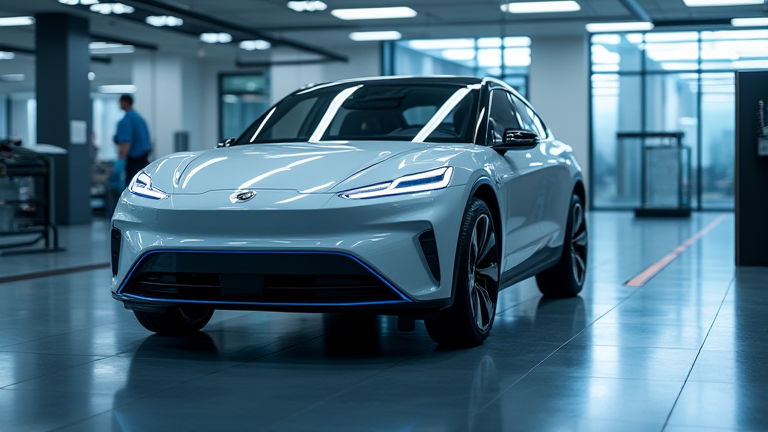
Solid-state batteries have officially transitioned from laboratory prototypes to limited mass production for select premium electric vehicles, marking a pivotal milestone in automotive energy storage. This shift promises significantly higher energy density and faster charging times, fundamentally altering the landscape for high-end EV manufacturers.
The Arrival of Commercial Solid-State Tech
TL;DR: Solid-state batteries are now entering mass production in premium EVs, offering superior safety and range. This development accelerates the industry’s move away from traditional lithium-ion chemistries.
Leading automotive giants have announced the commencement of mass production lines for solid-state battery cells, specifically targeting luxury sedans and high-performance SUVs. Unlike conventional lithium-ion batteries that use liquid electrolytes, these new cells utilize solid ceramic or polymer electrolytes. This structural change eliminates the risk of thermal runaway, a major safety concern in current EVs, while allowing for the integration of higher-capacity anodes and cathodes. The result is a battery pack that is not only safer but also significantly lighter and more compact.
If you want to dig deeper, check out our guide on 5 Science-Backed Habits for Better Health: What Actually Wor.
Technical Specifications and Performance Gains
The latest commercial solid-state packs boast an energy density exceeding 400 Wh/kg, a substantial leap from the 250-300 Wh/kg range typical of high-end lithium-ion packs. This increase translates directly to extended driving ranges, with initial models promising over 500 miles on a single charge. Furthermore, the solid electrolyte enables faster ion transport, facilitating rapid charging capabilities. Early tests indicate that these batteries can recharge from 10% to 80% in under fifteen minutes, comparable to refueling a gasoline vehicle. The thermal stability of the solid-state design also allows for operation in a wider temperature range, maintaining efficiency in extreme cold or heat without significant capacity loss.
Industry Impact and Future Outlook
The introduction of solid-state batteries in premium segments is expected to create a ripple effect throughout the automotive industry. Competitors are accelerating their R&D efforts to keep pace, potentially compressing the timeline for broader market adoption. Supply chains are also undergoing transformation as demand for specific materials like lithium sulfide and ceramic separators grows. While current production costs remain high, restricting availability to luxury vehicles, economies of scale are projected to drive prices down over the next five to seven years. This technology is not just an incremental improvement but a paradigm shift, positioning solid-state batteries as the cornerstone of next-generation electric mobility. As production volumes scale, we can expect these batteries to trickle down into mid-range vehicles, ultimately democratizing access to longer range and faster charging technologies for the average consumer.
FAQ
Q: How much more range does a solid-state battery offer compared to standard lithium-ion?
A: Solid-state batteries typically offer 30% to 50% more range due to higher energy density, potentially exceeding 500 miles in premium EVs.
Q: Are solid-state batteries safe for everyday use in extreme weather?
A: Yes, they are safer and more stable, performing well in both extreme cold and heat without the degradation issues common in liquid electrolyte batteries.
Q: When will solid-state batteries become available in affordable cars?
A: While currently limited to premium models, mass production scaling is expected to make them available in mid-range vehicles within five to seven years.
Leave a Reply