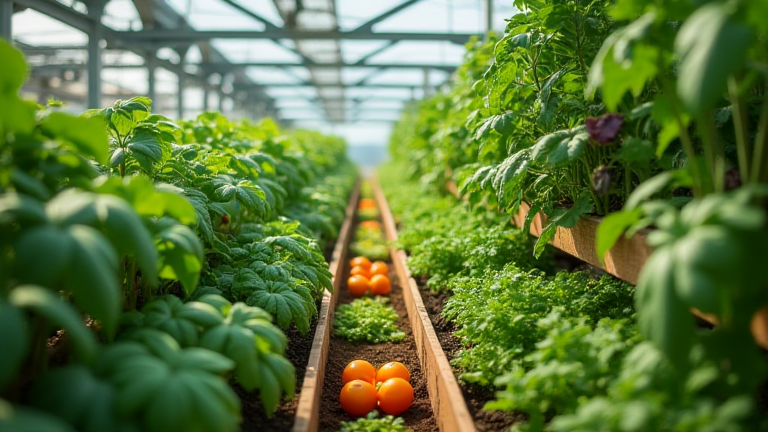
AI Vertical Farming: How Urban Micro-Farms Grow Food in Cities
TL;DR: AI vertical farming utilizes machine learning algorithms and automated sensors to optimize light, water, and nutrients in stacked indoor environments. This technology allows cities to produce fresh, pesticide-free produce locally by continuously adjusting growing conditions for maximum yield and minimal waste.
Urban agriculture is undergoing a revolutionary shift, driven by artificial intelligence. Traditional farming relies on weather and seasonal cycles, but AI-driven vertical farms create controlled, year-round production systems. These micro-farms are often located in basements, warehouses, or abandoned buildings, turning unused urban space into productive green zones. The core of this innovation lies in the seamless integration of hardware and software. High-precision LED lighting systems mimic sunlight, while AI algorithms determine the exact spectrum and intensity required for specific plant varieties at different growth stages. This precision ensures faster growth cycles and higher nutritional content compared to field-grown crops.
If you want to dig deeper, check out our guide on Solo Founders Scale with AI-Native Back Offices.
Step-by-Step Implementation Guide
To establish or understand the workflow of an AI vertical farm, follow these essential steps. First, select a suitable urban location with reliable power access and adequate space for stacked racks. Next, install the physical infrastructure, including hydroponic or aeroponic channels, climate control units, and LED arrays. Once the hardware is in place, deploy a network of IoT sensors. These sensors continuously monitor critical variables such as humidity, temperature, pH levels, and dissolved oxygen in the nutrient solution. The data from these sensors is fed into a central AI platform. The machine learning models analyze this real-time data against historical performance metrics to predict optimal conditions. If the system detects a deviation, such as a slight drop in pH, it automatically adjusts the nutrient dosing pumps to correct the imbalance before it affects plant health.
Modern systems also incorporate computer vision. Cameras monitor plant growth daily, using image recognition to identify early signs of disease, nutrient deficiencies, or pest infestations. This proactive approach reduces crop loss significantly. Finally, the harvest process is streamlined. AI predicts the exact moment of peak ripeness, ensuring that produce is picked at its most nutritious and flavorful state. This precision scheduling also helps in managing inventory and logistics, reducing food waste in the supply chain.
Essential Tips for Success
When integrating AI into vertical farming, data quality is paramount. Ensure that your sensors are regularly calibrated to provide accurate readings. Inaccurate data leads to suboptimal decisions by the AI model. Additionally, start with a small pilot program to fine-tune your algorithms for specific crop varieties. Not all plants respond to the same environmental stimuli. Collaborate with agronomists to interpret AI insights and adjust biological protocols accordingly. Regular software updates are crucial as AI models improve over time, allowing for better predictive accuracy and efficiency.
FAQ
Q: How much water does AI vertical farming save compared to traditional agriculture?
A: It can save up to 95% of water because the closed-loop hydroponic systems recirculate and reuse nutrient solutions, minimizing evaporation and runoff.
Q: Is AI vertical farming economically viable for small-scale urban growers?
A: While initial setup costs are high due to technology and infrastructure, the reduced land, water, and labor costs often lead to a positive return on investment within three to five years.
Q: What types of crops are best suited for AI-driven vertical farms?
A: Leafy greens like lettuce and spinach, herbs like basil and mint, and strawberries are ideal because they have short growth cycles and high market demand in urban centers.
Leave a Reply