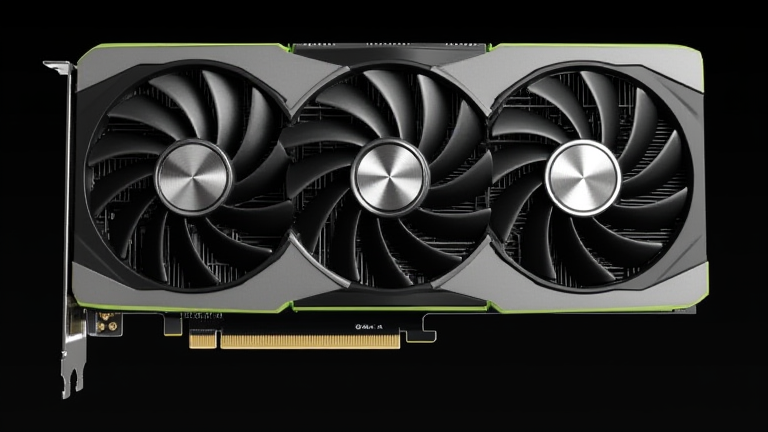
TL;DR: The NVIDIA A100 remains a highly profitable asset because its Tensor Cores provide exceptional performance-per-dollar for inference workloads that do not require the latest generation hardware. Its widespread availability in secondary markets allows organizations to deploy large-scale AI models at a fraction of the cost of newer, scarce alternatives like the H100.
Why the A100 Still Generates Revenue
When NVIDIA released the A100 in 2020, it was designed as a powerhouse for training massive deep learning models. However, the landscape of artificial intelligence has shifted dramatically. While training requires raw, brute-force compute, inference—running those trained models to generate answers or predictions—has become the dominant cost center for most enterprises. The A100, built on the Ampere architecture, possesses specific features, notably its Tensor Cores, that make it surprisingly efficient for these inference tasks. Unlike newer chips that prioritize extreme peak performance for training, the A100 offers a stable, mature environment that handles large language models with remarkable stability. Furthermore, the scarcity of newer GPUs like the H100 and H200 has created a bottleneck in the market. Companies that acquired A100s earlier now sit on assets that retain significant value, allowing them to rent out compute power to startups and researchers who cannot afford the premium price tag of flagship hardware. This secondary market has transformed what some might consider “old” technology into a liquid financial asset.
If you want to dig deeper, check out our guide on YouTube Changes How Long-Form Video Views Are Counted.
Step-by-Step: Maximizing Profitability
To turn this hardware into a consistent revenue stream, you must optimize your deployment strategy. First, conduct a thorough audit of your current workloads. Identify jobs that are compute-bound but do not require the specific architectural advantages of the Hopper generation. Many standard natural language processing and computer vision tasks run perfectly well on Ampere. Next, implement containerization using Docker or Kubernetes. This allows you to slice the A100’s memory and compute resources into smaller, sellable units. By isolating individual models within containers, you can serve multiple clients simultaneously on a single physical card, significantly increasing your return on investment. You should also leverage NVIDIA’s TensorRT-LLM library. This software optimization layer is crucial for the A100, as it reduces latency and increases throughput for large language model inference. Without this software stack, the hardware potential remains largely untapped. Finally, establish partnerships with cloud marketplaces or private AI hosting services. Instead of trying to build your own platform from scratch, list your available A100 instances on existing networks. This reduces customer acquisition costs and provides immediate access to a global pool of buyers looking for cost-effective compute.
Pro Tips for Long-Term Success
Monitor power efficiency closely. The A100 is powerful, but it consumes significant electricity. Ensure your cooling infrastructure is optimized to prevent thermal throttling, which can degrade performance and increase operational costs. Additionally, stay updated on driver compatibility. NVIDIA regularly releases updates that improve performance on existing hardware. Keep your systems patched to ensure you are getting the best possible speed and stability for your clients. Do not ignore the networking aspect. If you are running distributed inference, ensure your interconnects are not becoming a bottleneck. Upgrading network cards can sometimes yield higher returns than upgrading the GPU itself. Lastly, maintain a reserve of spare units. Hardware failure is inevitable in high-utilization environments. Having backup nodes allows you to maintain service level agreements with your clients without downtime, preserving your reputation and recurring revenue.
FAQ
Q: Is the A100 still relevant for training new large language models?
A: While possible, it is generally not cost-effective compared to newer architectures like H100. The A100 shines brightest in inference, where its performance per dollar is superior for running existing models.
Q: How does the A100 compare to the T4 for inference tasks?
A: The A100 offers significantly higher throughput and memory bandwidth, making it suitable for larger batch sizes and more complex models. The T4 is better for smaller, lightweight tasks where cost is the
Leave a Reply