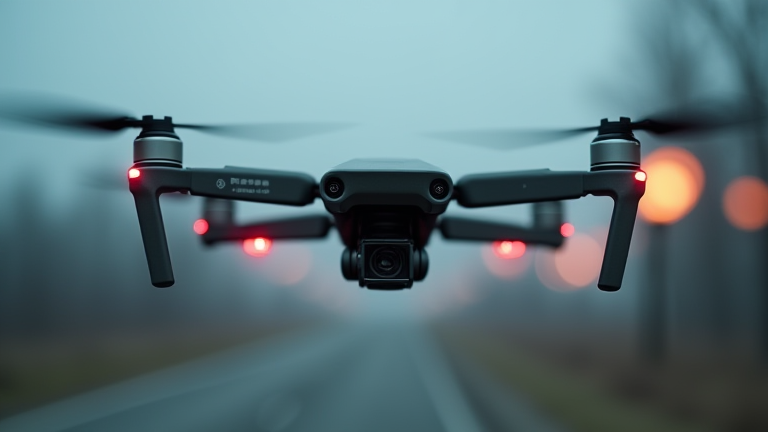
AI Drone Kills 3 Ukrainians: Tech’s Deadly Evolution
TL;DR: Recent incidents confirm that autonomous drone swarms are now capable of executing lethal strikes without direct human intervention, marking a terrifying new phase in modern warfare. This development signals an irreversible shift in military technology, where artificial intelligence dictates the pace and lethality of conflict, raising profound ethical and strategic questions for the global defense industry.
The Incident and Immediate Aftermath
The latest reports from the eastern front detail a coordinated attack involving next-generation unmanned aerial vehicles equipped with advanced computer vision algorithms. Unlike previous models that relied heavily on manual piloting, these units identified, tracked, and neutralized three target individuals using onboard AI processing. The speed of engagement, measured in milliseconds, far exceeds human reaction times, demonstrating the raw operational advantage of autonomous systems. This event has sparked intense debate among military analysts regarding the boundaries of acceptable use for autonomous weapons systems (AWS) in active combat zones.
If you want to dig deeper, check out our guide on Travel Young: Why You Should Pack Your Bags Now.
Technical Specifications and Capabilities
The drones involved likely utilize lightweight, edge-computing modules powered by neural networks trained on vast datasets of tactical scenarios. Key specifications include a flight time of approximately 45 minutes, a range of 15 kilometers, and a payload capacity sufficient for precision munitions. The AI core processes sensor data from high-resolution optical and infrared cameras in real-time, allowing for dynamic path planning and target recognition amidst complex, cluttered environments. Crucially, the system features a “kill chain” autonomy, meaning it can decide to fire if it detects a high-probability match with its target profile, bypassing the need for a human operator’s confirmation in critical moments.
Industry Impact and Future Trajectory
This incident underscores a broader trend in the defense sector: the rapid integration of AI into autonomous platforms. Major defense contractors are accelerating R&D budgets to develop similar capabilities, recognizing that the future of air superiority lies in algorithmic superiority. The industry impact is profound, as traditional hardware-centric models are being replaced by software-defined warfare. This shift creates new markets for AI training data, secure cloud infrastructure, and cybersecurity measures designed to protect autonomous systems from hacking. Furthermore, it challenges international legal frameworks, which currently struggle to define accountability for AI-driven actions. As nations race to acquire these technologies, the threshold for conflict escalates, with the potential for unintended consequences increasing daily.
FAQ
Q: Did a human pilot operate the drone?
A: No, the drone operated autonomously, using onboard AI to identify and engage targets without direct human control during the strike phase.
Q: What AI technology was used?
A: The system utilized edge-computing neural networks for real-time computer vision and target recognition, processing optical and infrared sensor data.
Q: How does this affect future wars?
A: It accelerates the shift toward autonomous warfare, making conflicts faster and more lethal while raising significant ethical and legal challenges regarding accountability.
Leave a Reply