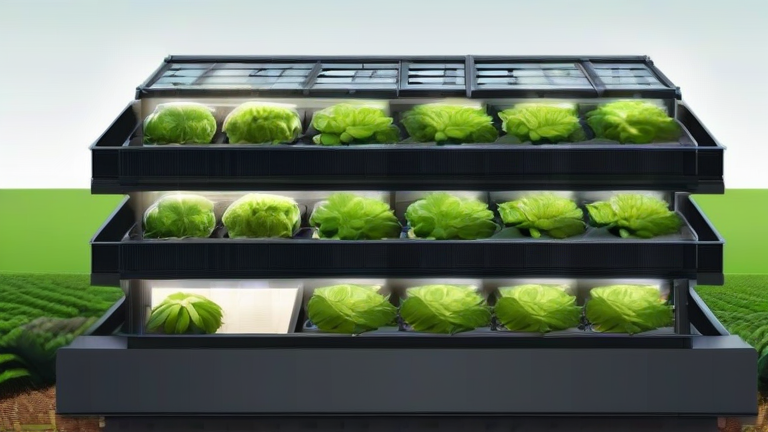
AI-Powered Microclimate Control: The Key to Scaling Vertical Farms
TL;DR: AI-driven microclimate control allows vertical farms to dynamically optimize light, temperature, and humidity for each individual crop zone in real-time. This precision significantly reduces resource waste while boosting yield consistency, making large-scale vertical agriculture economically viable.
The vertical farming industry is currently undergoing a paradigm shift, moving from static environmental settings to dynamic, AI-managed ecosystems. Traditional vertical farms often struggled with energy inefficiencies and inconsistent crop quality due to the rigid nature of manual or pre-programmed automated systems. However, the latest developments in artificial intelligence have introduced sophisticated sensor networks and predictive algorithms that can adjust environmental parameters on a minute-by-minute basis. By leveraging machine learning, these systems can identify subtle patterns in plant growth stages and adjust LED light spectra, CO2 levels, and irrigation schedules with unprecedented precision.
If you want to dig deeper, check out our guide on US-China Chip War: Rare Earth Curbs Escalate.
Recent hardware specifications highlight the integration of low-power IoT sensors that monitor microclimates at the leaf level. These devices transmit data to central AI processors capable of handling millions of data points per second. For instance, new generations of edge-computing devices allow for local decision-making, reducing latency and ensuring that corrective actions are taken instantly. The result is a reduction in energy consumption by up to forty percent, as lighting and heating systems operate only when and where necessary. Furthermore, water usage has seen a dramatic decrease, with recirculating hydroponic systems guided by AI demand-based irrigation models.
The industry impact of these technologies is profound. Investors are increasingly favoring startups that demonstrate AI-driven operational efficiency, as it directly correlates to improved profit margins. Major players in the sector are reporting higher crop yields and reduced labor costs, as the AI handles complex environmental adjustments that previously required specialized agronomists. This shift is democratizing high-tech farming, allowing smaller operations to compete with large industrial farms by providing access to scalable, cost-effective control software. As the technology matures, we can expect even tighter integration with robotic harvesting and seed-to-harvest automation, creating fully autonomous agricultural facilities. The future of food production lies in this intelligent, responsive infrastructure that treats every plant as a unique entity requiring specific care, ensuring that vertical farms can meet the growing global demand for fresh produce without expanding physical land footprints.
FAQ
Q: How much energy does AI control save?
A: Studies indicate that AI-optimized microclimates can reduce energy consumption by 30% to 40% compared to static systems.
Q: Can these systems work with any crop?
A: Yes, the algorithms can be trained on specific plant data, making them adaptable to leafy greens, herbs, strawberries, and flowers.
Q: Is the initial setup cost prohibitive?
A: While sensor hardware has a cost, the long-term savings in energy and labor typically offset the investment within two to three years.
Leave a Reply