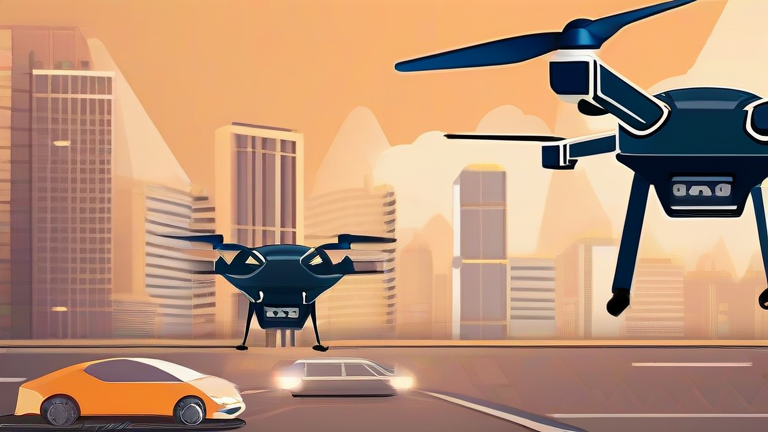
TL;DR: Autonomous drones are no longer a sci-fi fantasy; they are actively reshaping how goods move through our cities, cutting delivery times from days to minutes. This shift is quietly altering our daily rhythms—from how we eat, to how we shop, to the very culture of waiting.
The New Skyline: A Culture of Instant Gratification
Imagine this: you’re hosting a dinner party, realize you forgot the saffron, and a small quadcopter lands on your balcony with the spice within fifteen minutes. That’s not a gimmick—it’s the new normal in pilot cities like Shenzhen, Dallas, and Zurich. The drone revolution isn’t about replacing trucks entirely; it’s about creating a layered logistics network where aerial robots handle the “last mile”—the most expensive and time-consuming leg of delivery. For the urban dweller, this means a fundamental shift in personal planning. We no longer batch errands; we live in a state of fluid, on-demand provisioning. The cultural impact is profound: patience is becoming an optional virtue, and spontaneity is the new luxury.
If you want to dig deeper, check out our guide on Parked Waymos Secretly Record Your Neighborhood: What You Ne.
Food, Travel, and the Taste of Speed
For food lovers, this is a renaissance. Hot, fresh ramen delivered from a restaurant three miles away without a sweaty courier or a soggy container? Drones fly at consistent speeds and altitudes, minimizing jostling and temperature loss. In cities with dense street food cultures, vendors now use drones to expand their reach beyond walk-up crowds, serving office towers and park picnics. Travelers, too, benefit: lost luggage is being replaced by “luggage-on-demand” services at airports, where a drone brings your forgotten charger or medication to your gate. On a personal growth level, this technology forces us to reconsider our relationship with time. When delivery takes ten minutes, we must ask: what else can we unlearn about waiting? The answer is a more agile, less anxious existence—one where we trust the sky as much as the street.
Navigating the Noise: A Personal Growth Angle
But transformation isn’t without friction. The hum of rotors above apartment blocks requires a new kind of civic mindfulness. Early adopters report that they’ve learned to schedule deliveries around quiet hours, not just for neighbors, but for their own peace. This is the hidden curriculum of drone logistics: it teaches us to balance convenience with consideration. We become co-pilots in our own neighborhoods, negotiating airspace etiquette alongside human traffic. For the modern urbanite, embracing this shift means letting go of the fear of “too much technology” and instead curating how it serves our daily rituals—from a quieter morning coffee to a perfectly timed picnic in the park.
FAQ
Q: Are drone deliveries actually safe in crowded cities?
A: Yes, in regulated corridors. Modern systems use redundant rotors, collision-avoidance sensors, and pre-mapped low-altitude lanes that avoid pedestrians, power lines, and birds. They also have emergency parachutes and geo-fencing to prevent fly-aways, with a safety record that now rivals ground couriers in pilot zones.
Q: How does this affect local delivery jobs and small businesses?
A: It shifts roles rather than eliminating them. Ground couriers move to high-value, heavy, or multi-stop deliveries, while drone operators, maintenance techs, and logistics coordinators become new job categories. Small restaurants gain a low-cost delivery option that was previously dominated by large food apps with high commission fees.
Q: What do I need to do to receive a drone delivery at my home?
A: You’ll need a clear landing zone—usually a pad, balcony rail, or designated rooftop box—plus a smartphone app for geolocation and drop-off confirmation. Most services require you to be present for the final 30 seconds, but newer models can autonomously lower a package without landing, so you don’t even need to step outside.
Leave a Reply