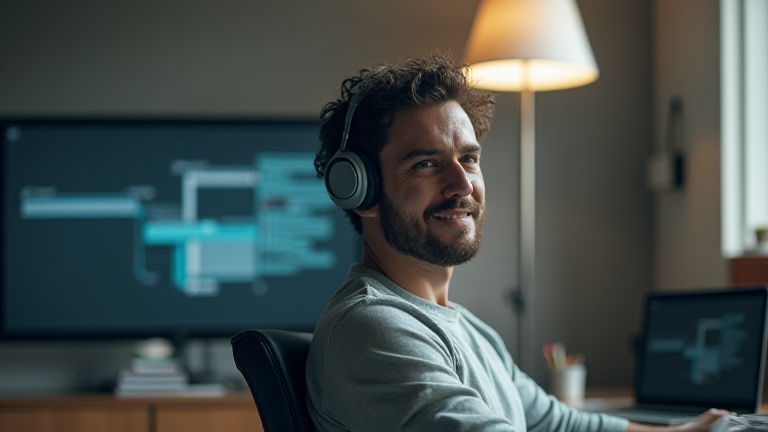
Boost Remote Work Focus with Neurotech Headsets
The landscape of remote work has evolved dramatically over the past few years, shifting from a temporary necessity to a permanent fixture in the global corporate infrastructure. However, as home offices become the new norm, a significant challenge persists: maintaining deep focus amidst domestic distractions. Enter neurotechnology, a rapidly expanding sector that promises to revolutionize how we interact with digital environments. At the forefront of this revolution are neurotech headsets, devices that leverage brain-computer interface (BCI) technology to monitor cognitive states and enhance productivity. These innovative tools are not just futuristic gadgets; they are becoming essential instruments for knowledge workers seeking to reclaim their attention spans in an increasingly fragmented digital world.
Latest Developments in Brain-Computer Interfaces
The most recent advancements in neurotech headsets have moved beyond simple novelty into the realm of practical, data-driven productivity aids. Leading companies in this space have integrated advanced electroencephalogram (EEG) sensors with artificial intelligence algorithms that can interpret neural signals in real-time. Unlike earlier generations of headsets that required extensive calibration and produced noisy data, modern devices utilize dry-electrode technology and machine learning models to provide accurate, instantaneous feedback on a user’s focus levels, stress, and relaxation states. This technological leap allows for seamless integration into daily workflows, offering subtle cues through audio or visual notifications when the user’s attention drifts.
If you want to dig deeper, check out our guide on Personalized Nutrition: Real-Time Microbiome Data Guide.
Furthermore, the latest iterations feature closed-loop systems. These systems do not merely monitor brain activity; they actively respond to it. For instance, if the headset detects a drop in focus, it can automatically adjust the ambient soundscapes in a user’s virtual background or suggest a brief mindfulness exercise. This dynamic interaction creates a personalized productivity ecosystem that adapts to the individual’s cognitive needs throughout the day, marking a significant departure from static productivity trackers.
Technical Specifications and User Experience
When examining the technical specifications of these devices, several key features stand out. Modern neurotech headsets typically feature between twenty and sixty EEG channels, providing high-resolution spatial data of brain activity. The devices are designed for
Leave a Reply