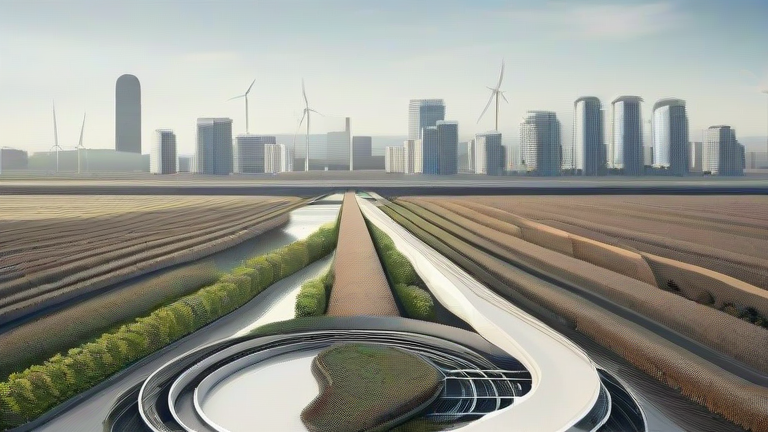
TL;DR: The circular economy is rapidly replacing the traditional linear take-make-waste model as the new industrial standard, driven by regulatory pressure and consumer demand for sustainability. This shift is not merely an ethical choice but a strategic imperative that promises significant economic growth and resource security for forward-thinking companies.
The End of the Linear Era
For decades, the global industrial base operated on a linear model: extract resources, manufacture products, use them, and discard them. This approach ignored the finite nature of our planet’s resources and the growing cost of waste disposal. However, the landscape is changing dramatically. The circular economy, which emphasizes designing out waste, keeping products and materials in use, and regenerating natural systems, is emerging as the dominant framework for modern industry.
Market data supports this transition with undeniable clarity. According to recent reports from the Ellen MacArthur Foundation, the global circular economy could generate $4.5 trillion in economic benefits by 2030. This figure is derived from reduced material costs, lower energy consumption, and new business opportunities in repair, reuse, and recycling sectors. Furthermore, the World Economic Forum estimates that implementing circular strategies could reduce global greenhouse gas emissions by 39%, aligning corporate goals with critical climate targets. These statistics are not just projections; they are becoming reality as early adopters see tangible returns on their sustainability investments.
Expert Insights on Implementation
Industry leaders emphasize that this shift requires a fundamental rethinking of business models. Dr. Elena Rostova, a leading sustainability strategist, notes, “Companies are no longer asking if they should go circular, but how fast they can transition. The focus has moved from end-of-pipe recycling to product-as-a-service models, where manufacturers retain ownership of materials.” This insight highlights a crucial trend: value is shifting from volume sales to service delivery and longevity.
Major corporations across various sectors are leading this charge. In the technology sector, companies are designing modular devices that are easier to repair and upgrade, extending product lifespans. In fashion, brands are utilizing recycled textiles and offering rental services to minimize waste. The automotive industry is exploring battery second-life applications, where retired electric vehicle batteries are repurposed for energy storage systems. These examples illustrate a broader trend where innovation is driven by the need to decouple economic growth from resource consumption.
Future Predictions and Challenges
Looking ahead, the circular economy will likely become the default operating system for global commerce. By 2035, it is predicted that circular practices will be embedded in over 50% of all manufacturing processes. Regulatory frameworks will play a pivotal role, with the European Union’s Circular Economy Action Plan serving as a blueprint for other regions. Governments are increasingly imposing extended producer responsibility laws, forcing companies to account for the entire lifecycle of their products.
However, challenges remain. Supply chain transparency is difficult to achieve, and initial investment costs for circular infrastructure can be high. Smaller enterprises may struggle to compete without support mechanisms. Despite these hurdles, the momentum is undeniable. The convergence of technological advancements, such as blockchain for traceability, and shifting consumer values is creating an environment where circularity is not just an option but a necessity for long-term survival. Companies that fail to adapt risk obsolescence, while those that embrace it will lead the next era of industrial innovation.
FAQ
Q: What is the primary difference between linear and circular economy models?
A: The linear model follows a take-make-waste approach, whereas the circular economy focuses on keeping materials in use through sharing, leasing, reusing, repairing, and recycling.
If you want to dig deeper, check out our guide on 10 Science-Backed Tips for Better Health & Wellness.
Q: How much economic value can the circular economy generate?
A: Estimates suggest the global circular economy could generate $4.5 trillion in economic benefits by 2030 through reduced material costs and new business opportunities.
Q: What role do governments play in promoting circular economy adoption?
A: Governments implement regulations such as extended producer responsibility laws and provide incentives for sustainable
Leave a Reply