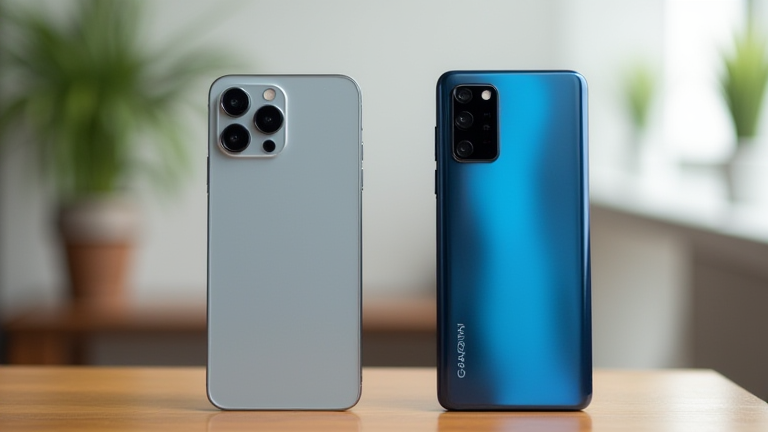
iPhone 16 Pro vs Galaxy S25 Ultra: Real-World Camera Test
TL;DR: The iPhone 16 Pro wins for video consistency and color accuracy, while the Galaxy S25 Ultra dominates in low-light detail and zoom capabilities. Choose based on whether you prioritize cinematic video or versatile photography.
The New Contenders
The smartphone camera market has reached a maturity phase where hardware improvements are incremental, but computational photography has become the decisive factor. The iPhone 16 Pro introduces a 48-megapixel main sensor with enhanced dynamic range and a new 5x telephoto lens, significantly narrowing the gap with Samsung’s flagship. Meanwhile, the Galaxy S25 Ultra debuts with a quad-camera system, featuring a 200-megapixel main sensor and a 50-megapixel periscope zoom that promises unprecedented detail at long distances. Both devices leverage AI-driven processing to enhance night shots, but their philosophies differ markedly.
If you want to dig deeper, check out our guide on The Ultimate SEO Tutorial: Step-by-Step Guide for Beginners.
Daylight and Low-Light Performance
In bright daylight, the iPhone 16 Pro delivers natural, true-to-life colors that require minimal post-processing. Its HDR engine excels at preserving highlights in skies and shadows in faces, making it a favorite for portrait enthusiasts. The Galaxy S25 Ultra, conversely, pushes saturation and contrast, producing images that pop immediately on social media but may appear slightly over-processed to purists. In low-light scenarios, the S25 Ultra’s larger sensor and superior noise reduction algorithms yield clearer, brighter images. The iPhone’s Night Mode is excellent for street photography but struggles with fast-moving subjects, whereas Samsung’s algorithm stabilizes frames effectively, though it occasionally smooths out textures too aggressively.
Video and Zoom Capabilities
Video recording remains the iPhone’s stronghold. The 16 Pro’s 4K 120fps Dolby Vision capture is unmatched in stability and color grading, offering a near-cinematic experience. The Galaxy S25 Ultra offers 8K recording, but file sizes are massive, and battery drain is significant. For zoom, the S25 Ultra’s 5x optical zoom is a clear winner, capturing distant subjects with remarkable sharpness. The iPhone’s 5x lens is competent but lacks the reach for truly distant shots. However, when switching to 10x or higher, the iPhone’s computational zoom maintains better structural integrity, whereas Samsung’s digital zoom tends to introduce artifacts in complex scenes.
Industry Impact and Specs
These developments signal a shift from megapixel counts to intelligent processing. Manufacturers are now competing on AI integration, specifically for real-time scene detection and subject isolation. The industry impact is profound, as consumer expectations for “out-of-the-box” quality have skyrocketed. Both phones support 8-bit and 10-bit video profiles, catering to professional creators. The hardware specifications are closely matched, with both using leading-edge image processors that handle billions of calculations per second to optimize every frame. This arms race forces other competitors to accelerate their R&D cycles, potentially leading to faster adoption of periscope lenses and larger sensors across mid-range devices.
FAQ
Q: Which phone has better zoom?
A: The Galaxy S25 Ultra has better optical zoom reach and sharper distant images due to its 50-megapixel periscope lens.
Q: Is the iPhone 16 Pro better for video?
A: Yes, the iPhone 16 Pro offers superior color accuracy, stability, and efficient file sizes for 4K video recording.
Q: Do these phones support professional photo formats?
A: Both devices support ProRAW and ProRAW-style formats, allowing manual control for post-processing in lightroom or Lightroom.
Leave a Reply