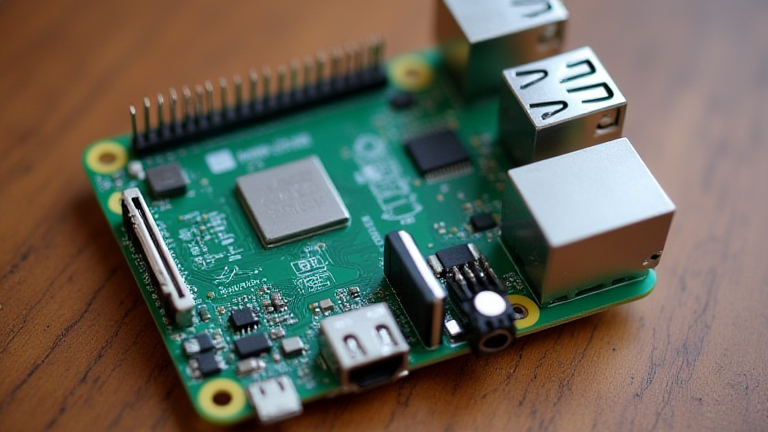
Raspberry Pi 5 vs 4: Is the Upgrade Worth It
TL;DR: Yes, the upgrade is worth it for users needing higher single-core performance, modern PCIe connectivity, or improved thermal management for sustained workloads. However, for basic IoT projects or hobbyist coding, the Raspberry Pi 4 remains a cost-effective and perfectly capable choice.
The Architectural Leap
The transition from the Raspberry Pi 4 to the Raspberry Pi 5 represents a significant generational shift in embedded computing. While the Pi 4 relied on the Broadcom BCM2711 SoC with a quad-core Cortex-A72 processor, the Pi 5 introduces the Broadcom BCM2712. This new chip features a quad-core Arm Cortex-A76 CPU, which offers a substantial increase in single-threaded performance. Benchmarks indicate that the Pi 5 is roughly twice as fast as the Pi 4 in single-core tasks, making it far more responsive for desktop usage, web browsing, and complex scripting languages like Python or Ruby. This improvement is critical for users who treat their single-board computer as a primary or secondary desktop device, as it reduces the lag associated with background processes and application loading.
If you want to dig deeper, check out our guide on Video Marketing Success Rates: Data & Benchmarks.
Connectivity and Expansion
One of the most impactful changes in the Pi 5 is the inclusion of a PCIe 2.0 interface. Previous models lacked this standard, forcing users to rely on slower USB buses for storage expansion or network accelerators. With the Pi 5, users can attach NVMe SSDs directly via M.2 hats, dramatically reducing boot times and file transfer speeds. This development transforms the Pi 5 from a simple hobbyist board into a serious edge computing node capable of handling high-throughput data tasks. Additionally, the new board features improved power delivery via a 5V USB-C port, supporting higher current draws without the voltage drop issues often seen in the Pi 4 when driving multiple peripherals. The addition of a dedicated I/O controller chip also offloads USB and SD card tasks from the main CPU, further enhancing system efficiency.
Industry Impact and Ecosystem
The industry response to the Raspberry Pi 5 has been mixed but largely positive, particularly in the enterprise and education sectors. Educational institutions are quick to adopt the Pi 5 for teaching systems programming and Linux administration, citing its closer alignment with modern x86 performance expectations. In the industrial space, the PCIe support opens new avenues for real-time data processing in manufacturing and robotics. However, the price increase is a notable barrier. The base model is more expensive than the Pi 4, and the recommended power supply is a new, proprietary design, which can complicate integration into existing projects. Despite this, the longevity of the Pi 4 ensures it will remain in production, creating a dual-market environment where developers choose based on specific performance needs rather than brand loyalty alone.
Thermal Management
Performance gains usually come with heat penalties, and the Pi 5 is no exception. The higher clock speeds and increased power draw mean that passive cooling is rarely sufficient for sustained loads. Users are strongly advised to use the official active cooler or third-party fans. This shift from passive to active cooling requirements changes the physical form factor considerations for projects. While the Pi 4 could often run silently in enclosed spaces, the Pi 5 may require additional space for airflow, impacting design constraints in compact industrial enclosures. Proper thermal management is essential to prevent thermal throttling, which would negate the performance benefits of the new architecture.
FAQ
Q: Can I use my existing Raspberry Pi 4 cases with the Pi 5?
A: Generally, yes, as the form factor and mounting hole positions remain identical, though you may need to account for larger heat sinks or active coolers.
Q: Is the Raspberry Pi 5 backward compatible with Pi 4 software?
A: Yes, the operating system images are largely compatible, but you will need to update to a newer version of Raspberry Pi OS to fully utilize the new hardware features and drivers.
Q: Does the Raspberry Pi 5 support
Leave a Reply