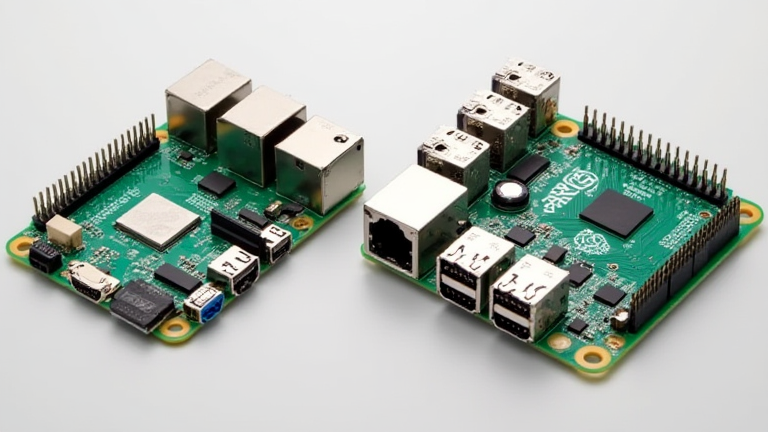
Raspberry Pi 5 vs Orange Pi 5: Which Board Wins
TL;DR: The Raspberry Pi 5 wins for developers who prioritize software support, community resources, and long-term stability. The Orange Pi 5 is the superior choice for users seeking raw computational performance and higher bandwidth at a lower price point.
The single-board computer (SBC) market has become increasingly competitive, with Raspberry Pi and Orange Pi emerging as the two dominant forces. Both manufacturers have released their fifth-generation flagship boards, targeting different segments of the enthusiast and industrial markets. Understanding the nuances between these two powerful devices is crucial for engineers, hobbyists, and educators alike. This article breaks down the latest developments, technical specifications, and broader industry impacts to help you determine which board truly reigns supreme for your specific needs.
If you want to dig deeper, check out our guide on Mainstream Longevity: Personalized Bio-Age Protocols.
Performance and Hardware Specifications
At the heart of the Raspberry Pi 5 lies the Broadcom BCM2712 processor, a quad-core Cortex-A76 CPU running at 2.4 GHz. This represents a significant leap in performance over the Pi 4, offering up to three times the speed. The Pi 5 also features 16 GB of LPDDR4X RAM and a dedicated VideoCore VII GPU. Crucially, the new board introduces the RP1 I/O controller, which offloads USB, PCIe, and other peripheral tasks from the main CPU, significantly reducing latency and improving responsiveness. The Pi 5 supports Wi-Fi 5, Bluetooth 5.0, and Gigabit Ethernet, maintaining a strong connectivity profile.
In contrast, the Orange Pi 5 is built around the Rockchip RK3588S SoC, a quad-core Cortex-A76 CPU clocked at 2.4 GHz, paired with four Cortex-A55 cores for efficiency. While the core architecture is similar, the RK3588S includes a more robust neural processing unit (NPU) capable of 6 TOPS of AI inference. The Orange Pi 5 typically comes with 8 GB or 16 GB of LPDDR4 RAM. A key differentiator is the connectivity: the Orange Pi 5 features dual 2.5 Gigabit Ethernet ports, Wi-Fi 6, and Bluetooth 5.2. This makes it inherently more future-proof for high-speed data applications and modern wireless standards compared to the Pi 5’s Gigabit Ethernet and Wi-Fi 5.
Software Ecosystem and Industry Impact
Performance metrics are only half the story; the software ecosystem is the other critical factor. Raspberry Pi benefits from an unparalleled ecosystem. It is supported by a vast array of official images, extensive documentation, and a global community of developers. Industries from education to aerospace rely on the Pi due to its proven track record and consistent long-term support. The availability of third-party accessories and cases is also unmatched, making integration into larger projects smoother.
Orange Pi, while growing rapidly, operates in a slightly different niche. It appeals to users who want maximum hardware capability per dollar. The community is smaller but highly active, particularly among Linux enthusiasts and industrial integrators. However, finding official support for specific operating systems or facing driver issues can sometimes be a hurdle compared to the polished experience of Raspberry Pi. The industry impact of the Orange Pi 5 is significant in cost-sensitive deployments where high performance is required without the premium associated with the Pi brand. It pushes competitors to improve their value propositions, driving innovation in the SBC sector.
Which Board Wins?
Ultimately, the “winner” depends on your priority. If you are an educator, a beginner, or a developer building a product for mass distribution, the Raspberry Pi 5 is the safer, more reliable choice. Its ecosystem ensures that help is always available, and its performance is sufficient for the vast majority of applications. On the other hand, if you are building a high-performance AI node, a media server, or a network gateway where raw throughput and modern connectivity features are paramount, the Orange Pi 5 offers superior hardware value. It delivers more bandwidth and better wireless standards for less money. For pure computational power and connectivity, the Orange Pi 5 takes the technical crown. For overall usability,
Leave a Reply