TL;DR: Remote work mandates are forcing companies to redesign physical spaces into collaborative hybrid hubs rather than traditional cubicle farms. This shift prioritizes flexibility, technology integration, and employee well-being to attract top talent in a competitive market.
The corporate world has undergone a seismic shift, moving away from the rigid nine-to-five office model toward a fluid, hybrid ecosystem. As remote work mandates become permanent fixtures in corporate policy, organizations are no longer asking if they should offer flexible work options, but how to best utilize their physical real estate to support a dispersed workforce. The result is the emergence of “hybrid office hubs”—smaller, strategically located spaces designed not for daily attendance, but for collaboration, culture-building, and complex problem-solving.
The Data Behind the Shift
Recent market analysis reveals a stark contrast between pre-pandemic and current workspace dynamics. According to a recent report by JLL, global office vacancy rates have stabilized at higher levels than historical averages, yet investment in flexible workspace providers has surged by 35% year-over-year. Meanwhile, a survey by Gartner indicates that 78% of knowledge workers prefer a hybrid model, with only 12% willing to return to full-time office attendance. This data underscores a critical reality: the traditional large-scale office is becoming an inefficient asset unless reimagined.
Companies like Microsoft and Shopify have already made bold moves, downsizing their physical footprints by up to 50% while investing heavily in digital collaboration tools. This trend is not limited to tech giants; financial institutions and healthcare providers are following suit, recognizing that physical presence is now a strategic choice rather than a mandatory routine. The focus has shifted from maximizing desk count to maximizing interaction quality.

Expert Insights on Design
Industry experts emphasize that the new hybrid hub must be technologically seamless. “The office of the future is not about desks; it is about destinations,” says Sarah Chen, a workplace strategy consultant at Deloitte. She argues that spaces must be equipped with high-quality audio-visual infrastructure to ensure remote participants feel equally present during meetings. This technological parity is crucial for maintaining team cohesion and preventing a two-tier system where on-site employees have more influence than remote colleagues.
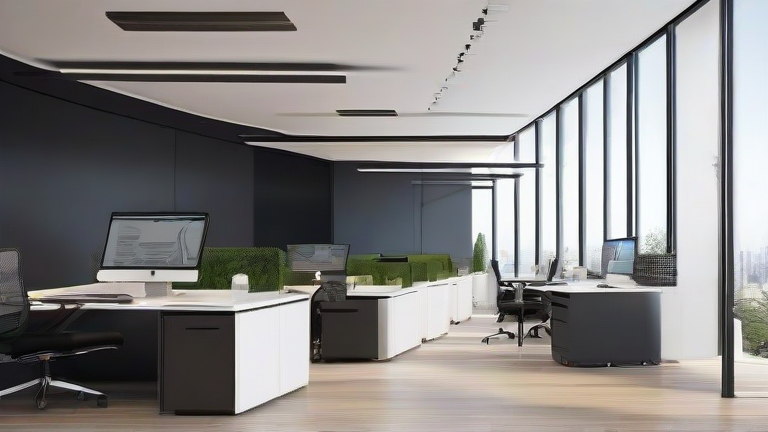
Furthermore, the design philosophy has moved towards wellness and flexibility. Modular furniture, soundproof pods, and outdoor meeting spaces are becoming standard features. These elements cater to the diverse needs of employees, allowing them to choose the environment that best suits their current task, whether it is deep focus or creative brainstorming.
Future Predictions
Looking ahead, we predict that by 2026, the majority of mid-to-large enterprises will operate with less than 40% of their pre-2019 office space. The concept of the “commute” will diminish further, with offices located closer to residential clusters or integrated into co-working networks. As AI tools automate routine administrative tasks, the human element of work will become even more valued, driving demand for spaces that facilitate genuine human connection.
FAQ
Q: What is the primary purpose of a hybrid office hub?
A: To facilitate collaboration, team building, and complex problem-solving rather than individual daily tasks.
If you want to dig deeper, check out our guide on How to Grow Your Business in 2024: 5 Proven Strategies.
Q: How is technology changing office design?
A: Technology is prioritizing seamless audio-visual integration to ensure remote participants have an equal experience to on-site staff.
Q: What is the projected office space reduction by 2026?
A: Most mid-to-large enterprises are expected to operate with less than 40% of their pre-2019 office space.
Leave a Reply