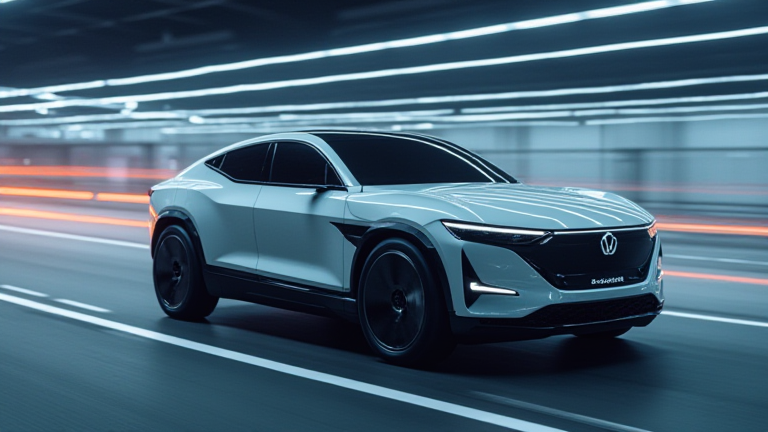
TL;DR: Solid-state batteries can plausibly deliver 1,000-mile EV range by replacing flammable liquid electrolytes with solid ones that enable lithium-metal anodes, roughly doubling practical energy density. Mass-market availability is still years away, with pilot production scaling through 2027–2030 and costs remaining the key barrier.
The 1,000-Mile Benchmark Moves From Concept to Roadmap
The race to 1,000-mile electric vehicles has shifted from marketing ambition to engineering milestone. Solid-state batteries—cells using a solid electrolyte instead of a liquid one—are the enabling technology most automakers now cite. The promise is tangible: lithium-metal anodes can roughly double cell-level energy density versus today’s best lithium-ion packs, which typically reach 250–300 Wh/kg. At 400–500 Wh/kg, a 150 kWh pack becomes lighter and smaller, making four-digit range feasible without bloating the vehicle.
If you want to dig deeper, check out our guide on GitHub Actions CI/CD Pipeline Tutorial for Beginners.
Market Data Points to Rapid Investment
According to industry tracking, global solid-state battery investment exceeded $10 billion in announced commitments through 2024, with Toyota, Samsung SDI, QuantumScape, Solid Power, and CATL among the most active players. Market researchers project the solid-state battery market could grow from under $1 billion today to roughly $8–15 billion by 2030, depending on commercialization pace. Toyota has targeted 2027–2028 for initial solid-state vehicle launches, while CATL has guided toward small-batch production around 2027. China’s government-backed consortium has pledged roughly $830 million to accelerate domestic solid-state R&D.
Expert Insights: Chemistry Solved, Manufacturing Isn’t
“The science is largely settled; the challenge is yield, cost, and scale,” says one battery-engineering lead at a major Asian cell manufacturer. Industry consensus holds that sulfide-based electrolytes offer the best conductivity but demand strict dry-room manufacturing, while oxide and polymer approaches trade performance for easier processing. Analysts note that early solid-state cells will likely cost two to three times conventional lithium-ion per kWh, limiting debut applications to premium vehicles. Executives also caution that 1,000-mile range may not be the smartest first target—faster charging and lower cost could deliver more customer value per dollar.
Future Predictions
Expect a three-phase rollout: limited premium models in 2027–2028, broader availability around 2030 as yields improve, and cost parity with advanced lithium-ion possibly by the early 2030s. Interim technologies—semi-solid and silicon-anode cells—will bridge the gap and may themselves reach 700–800 miles of range. By 2035, solid-state is projected to capture a meaningful double-digit share of the EV battery market, though lithium-ion will remain dominant for cost-sensitive segments.
FAQ
Q: When will 1,000-mile solid-state EVs actually be on sale?
A: Limited-production premium models are expected around 2027–2028, with broader availability likely by 2030 as manufacturing yields and costs improve.
Q: Why are solid-state batteries better than lithium-ion?
A: They enable lithium-metal anodes and higher voltage, roughly doubling energy density while improving safety and potentially charging speed—key for 1,000-mile range.
Q: What is the biggest barrier to adoption?
A: Cost and manufacturing scale. Early cells may cost two to three times conventional lithium-ion per kWh, requiring new dry-room production lines and mature supply chains.
Leave a Reply