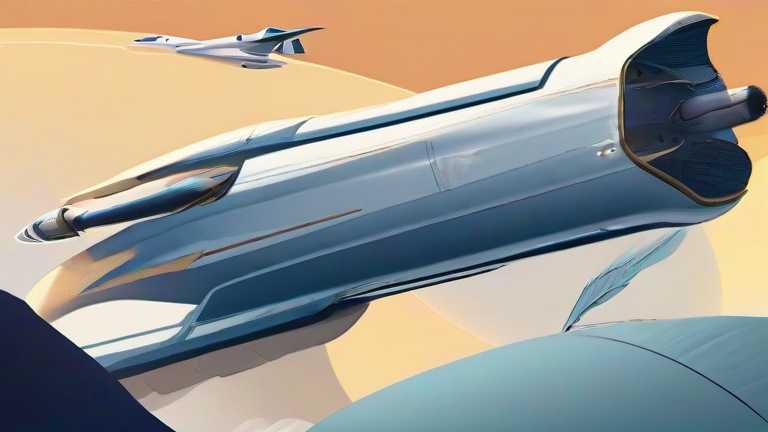
Space Tourism: Civilian Suborbital Flights & Future
The era of space tourism has officially transitioned from science fiction to commercial reality. Over the past few years, the aerospace industry has witnessed a seismic shift, driven by private companies aiming to democratize access to the cosmos. Unlike the rigorous training required for orbital astronauts, suborbital flights offer a unique experience: a brief glimpse of Earth’s curvature and the void of space, lasting only a few minutes of weightlessness. This article explores the latest developments, technical specifications, and the profound impact this emerging sector is having on the broader technological landscape.
Leading the charge are three primary players: Blue Origin, Virgin Galactic, and SpaceX. Blue Origin’s New Shepard rocket has successfully completed numerous crewed missions, taking tourists to the Kármán line, the boundary of space. The vehicle is designed for vertical takeoff and landing, ensuring high safety standards and reusability. Similarly, Virgin Galactic’s SpaceShipTwo operates as a spaceplane, carried to altitude by a mothership before igniting its rocket engine for the suborbital hop. While SpaceX focuses primarily on orbital flight with Crew Dragon, its Starship program hints at a future where point-to-point travel and lunar tourism become feasible. These missions represent more than just leisure; they are critical testing grounds for reusable launch technologies that will eventually reduce the cost of accessing space significantly.
If you want to dig deeper, check out our guide on Digital Detox Retreats Surge in Popularity: Why They’re Tren.
Technical Specifications and User Experience
Understanding the mechanics behind these flights reveals the engineering marvels involved. New Shepard reaches an altitude of approximately 100 kilometers (62 miles) at speeds exceeding Mach 3. The cabin is pressurized and climate-controlled, allowing passengers to remove their helmets and move freely in microgravity. The entire flight duration is roughly ten to fifteen minutes, with only three to four minutes of weightlessness. In contrast, Virgin Galactic’s vehicle reaches about 80 kilometers (50 miles). The experience is quieter, offering a smoother transition into weightlessness due to the air-breathing glide phase. Passengers report seeing the blue arc of the atmosphere against the blackness of space, a phenomenon known as the “overview effect,” which profoundly impacts human perspective. These specifications are carefully balanced to maximize safety while delivering the iconic visual experience that defines space tourism.
The industry impact extends far beyond the ticket sales for the ultra-wealth
Leave a Reply