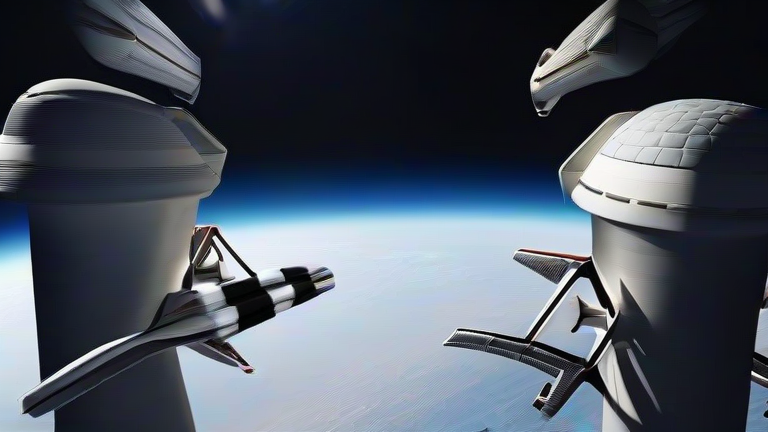
Space Tourism Offers Suborbital Flights: Your Guide
The dawn of the commercial space age has shifted from science fiction to a tangible economic reality, with suborbital tourism emerging as the initial gateway for private citizens. This sector represents more than just luxury travel; it signifies a fundamental restructuring of the aerospace industry, blending high-tech engineering with experiential marketing. As we analyze this burgeoning market, it is crucial to understand the distinct dynamics that separate suborbital flights from orbital missions, such as those offered by Axiom Space or SpaceX. Suborbital trajectories allow passengers to experience weightlessness and view the curvature of the Earth without the immense cost and duration associated with reaching low Earth orbit. This distinction is pivotal for investors and entrepreneurs looking to capitalize on the lower barrier to entry that suborbital travel provides.

Market analysis reveals a robust growth trajectory for the commercial space sector, projected to exceed $800 billion by 2040. However, the suborbital niche is currently dominated by a few key players, including Blue Origin and Virgin Galactic. Recent reports indicate that pre-order books for these companies have stabilized, suggesting that the initial hype phase has transitioned into a phase of operational refinement and customer acquisition. The target demographic remains ultra-high-net-worth individuals, but strategic pivots are underway to broaden the appeal. Airlines and luxury travel agencies are beginning to form partnerships, aiming to bundle space experiences with high-end terrestrial hospitality. This cross-industry collaboration is essential for scaling the market beyond its current elite confines.
If you want to dig deeper, check out our guide on 10 Proven Strategies to Scale Your Business in 2024.
From a strategic perspective, success in this field relies heavily on safety certifications and brand trust. Unlike traditional aviation, where regulations are well-established, space tourism operates in a regulatory gray area that is rapidly evolving. Companies must prioritize transparency regarding safety protocols to maintain consumer confidence. Furthermore, the user experience design is critical. The value proposition is not merely the flight itself but the entire journey, including training, media coverage, and the emotional impact of seeing Earth from space. Virgin Galactic’s recent commercial missions have provided valuable case studies on passenger management, highlighting the importance of psychological preparation and post-flight community building.
Leave a Reply