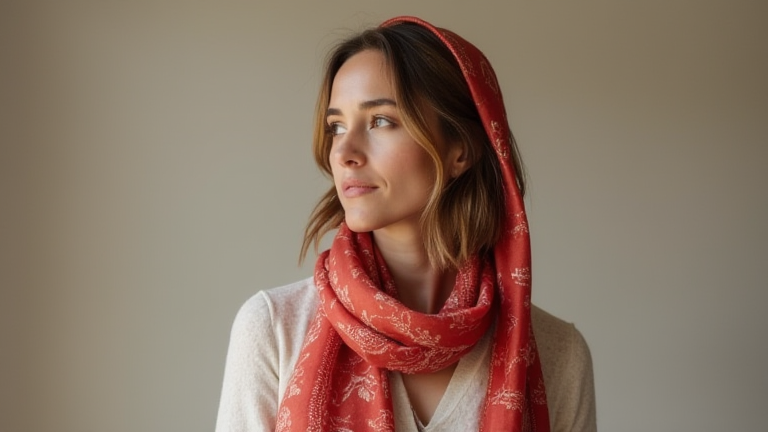
TL;DR: Quiet luxury is redefining silk scarf trends, shifting demand from loud logos to heritage craftsmanship and neutral palettes, with the global silk scarf market projected to grow at a 5.8% CAGR through 2030. Consumers now pay premiums for traceable mulberry silk and minimalist design over flashy branding.
The Shift from Logomania to Understated Elegance
The post-pandemic luxury consumer has traded flamboyant monograms for tactile, timeless pieces. According to a 2024 Bain & Company report, logo-heavy accessories saw a 12% decline in sales among Gen Z and millennial buyers, while “quiet luxury” items—defined by high-quality materials and subtle detailing—grew 23% year-over-year. In silk scarves, this translates to a preference for solid tones, tonal jacquard weaves, and hand-rolled hems over oversized prints.
If you want to dig deeper, check out our guide on Carbon Credit Sales vs. Tax Credits: Revenue Models for CCUS.
Market data from Euromonitor International confirms that the average price point for premium silk scarves rose 15% in 2024, yet unit sales increased 8%, indicating that buyers are purchasing fewer but better pieces. “The scarf is no longer a seasonal accessory; it’s a wearable heirloom,” says Claire Fontaine, head of accessories at a Paris-based luxury consultancy. “Clients ask about the silkworm origin, the loom type, and the artisan’s name—not the logo size.” This behavioral shift is pushing heritage houses like Hermès and Ferragamo to emphasize their archival weaves, while emerging brands like Manu Atelier are gaining traction with unprinted, hand-dyed silk twill.
Future Predictions: Sustainability and Digital Provenance
Looking ahead to 2027, expect blockchain-enabled traceability to become standard for luxury silk scarves, allowing buyers to verify the garment’s entire supply chain—from sericulture in Jiangsu to final stitching in Como. Additionally, AI-driven “capsule scarf” services will offer personalized color palettes based on skin tone and existing wardrobe, further reinforcing the quiet luxury ethos of mindful consumption. The trend will also influence retail: physical boutiques will prioritize tactile “silk bars” where customers can feel raw fabric swatches, rather than visual displays with bold patterns.
However, experts caution against over-minimalism. “Quiet luxury doesn’t mean boring,” notes textile analyst Dr. Yuki Tanaka. “The next wave will feature micro-textures—like subtle pinstripes in silk faille or tonal embroidered initials—that reward close inspection.” As inflation cools and travel returns, silk scarf sales are expected to see a mid-single-digit rise annually, with the Asia-Pacific region leading due to rising disposable incomes in Japan and South Korea.
FAQ
Q: Is quiet luxury only for high-end brands?
A: No. Mid-tier brands are adopting the aesthetic by using higher-grade silk (22 momme or above) and simplifying prints, often pricing at $150–$300, making the trend accessible without diluting its ethos.
Q: Will bold printed scarves disappear entirely?
A: Not fully. They will remain for statement occasions, but growth will focus on neutral, monochrome, and micro-patterned designs. Expect a 30% reduction in new bold-print SKUs by 2026.
Q: How can consumers verify “quiet luxury” quality?
A: Look for certifications like Global Organic Textile Standard (GOTS) for silk, check for hand-rolled hems (not machine-stitched), and request the fabric’s momme weight—premium scarves are typically 16–22 momme, with a soft, matte sheen.
Leave a Reply