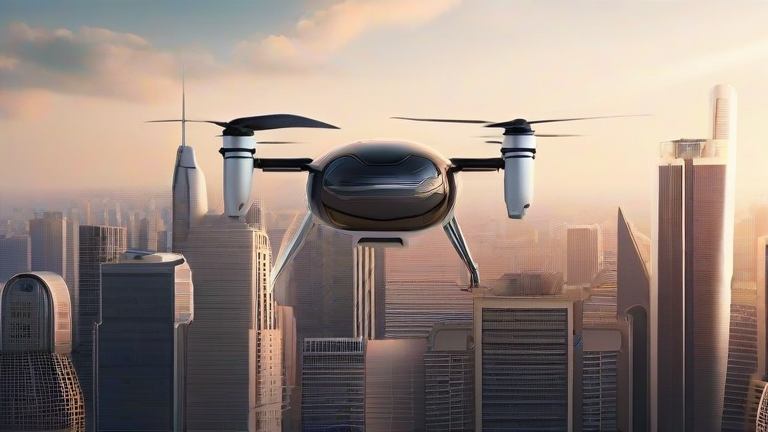
TL;DR: Urban Air Mobility is rapidly transitioning from conceptual prototypes to commercial reality in major global hubs, driven by urgent traffic congestion and technological breakthroughs. This emerging sector promises to revolutionize daily commutes by offering fast, sustainable aerial transportation options that bypass traditional ground infrastructure bottlenecks.
The Market Landscape Accelerates
The Urban Air Mobility (UAM) market is no longer a futuristic fantasy but a tangible economic force. Current market analysis indicates a compound annual growth rate exceeding 20% over the next decade, with global valuations projected to surpass $1 trillion by 2040. Major metropolitan areas like Singapore, Dubai, and Los Angeles are leading the charge, recognizing that vertical airspace offers the only viable solution to worsening ground traffic. Investors are pouring billions into eVTOL (electric Vertical Take-Off and Landing) manufacturers, attracted by the potential for high-frequency, short-haul transit solutions. The infrastructure requirements are distinct from aviation; instead of massive airports, cities need vertiports integrated into existing transit hubs, skyscrapers, and transportation nodes.
Strategic Pathways to Success

If you want to dig deeper, check out our guide on Best Ergonomic Office Chair for Back Pain Relief 2024.
Success in this sector requires more than just advanced aircraft technology. Companies must navigate complex regulatory frameworks and community acceptance issues. A winning strategy involves public-private partnerships, where governments provide regulatory sandboxes and airspace integration support. Furthermore, sustainability is a key selling point. Operators are leveraging electric propulsion to reduce noise pollution and carbon footprints, addressing environmental concerns that could otherwise stall progress. Customer experience design is equally critical; the service must be seamless, app-based, and integrated with existing mobility platforms to attract early adopters who value time savings over cost.
Real-World Case Studies
EHang, a Chinese eVTOL manufacturer, recently received type certification for its passenger-carrying drone in Guangzhou, marking a significant regulatory milestone. Meanwhile, Joby Aviation in the United States has partnered with Delta Air Lines to create a seamless travel network, connecting airports directly to city centers. In Europe, Volocopter is testing its two-pilot eVTOL in Singapore and Paris, focusing on emergency medical services and taxi operations. These examples demonstrate that diverse approaches are viable, whether through direct-to-consumer taxi services or specialized logistics and medical transport.
FAQ
Q: When will UAM services be commercially available?
A: Most experts predict limited commercial operations by 2025-2026, with broader availability expected by 2030 as infrastructure matures.
Q: How safe are eVTOL aircraft compared to traditional helicopters?
A: eVTOLs feature redundant electric motors and advanced autonomous safety systems, often resulting in lower accident rates and reduced noise levels.
Q: What is the primary cost barrier for early adoption?
A: High initial development and certification costs, along with the construction of necessary vertiport infrastructure, currently drive up service prices.
Leave a Reply