Urban Vertical Farms Boost Local Food Security
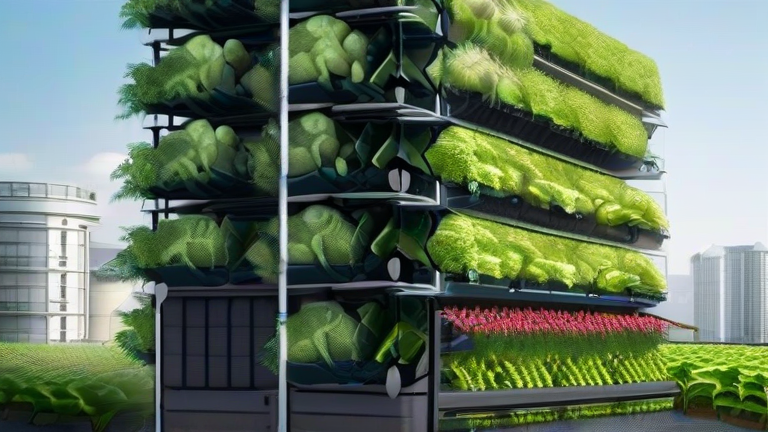
In an era defined by climate instability and supply chain vulnerabilities, the concept of food security has shifted from a distant concern to an immediate urban necessity. Traditional agriculture, while essential, faces increasing pressures from water scarcity, soil degradation, and extreme weather events. Enter urban vertical farming: a revolutionary agricultural technique that stacks crops in vertically stacked layers, often incorporating controlled-environment agriculture (CEA) technologies like hydroponics, aeroponics, or aquaponics. This method is not merely a trend; it is a critical component of future-proofing our local food systems.
By bringing production closer to consumption, vertical farms drastically reduce the “food miles” associated with traditional supply chains. This proximity ensures that produce reaches consumers with maximum nutritional integrity. Studies indicate that leafy greens harvested and consumed within hours of maturity retain significantly higher levels of vitamins C and K compared to those shipped across continents. For the health-conscious urbanite, this means accessing food that is not only fresher but also more nutrient-dense, directly combating the silent epidemic of micronutrient deficiencies prevalent in modern diets.
Beyond nutrition, the environmental benefits are profound. Vertical farms use up to 95% less water than traditional field farming because the water is recirculated in closed-loop systems. Furthermore, by eliminating the need for arable land expansion, these farms help preserve natural ecosystems and biodiversity. For the city dweller, this translates to a cleaner local environment and a reduced carbon footprint associated with transportation and refrigeration.
So, how can you integrate these benefits into your daily lifestyle? First, seek out locally grown vertical farm produce at farmers’ markets or through community-supported agriculture (CSA) boxes. Many urban vertical farms now offer subscription services that deliver hyper-local greens directly to your doorstep. When you buy locally, you support a resilient economy and ensure that your food has not traveled thousands of miles, preserving its natural enzymatic activity and flavor profile.
Second, consider starting a small-scale vertical garden at home. You do not need a farm-sized facility to benefit from this method. Compact indoor hydroponic systems fit easily on kitchen counters, balconies, or
Leave a Reply