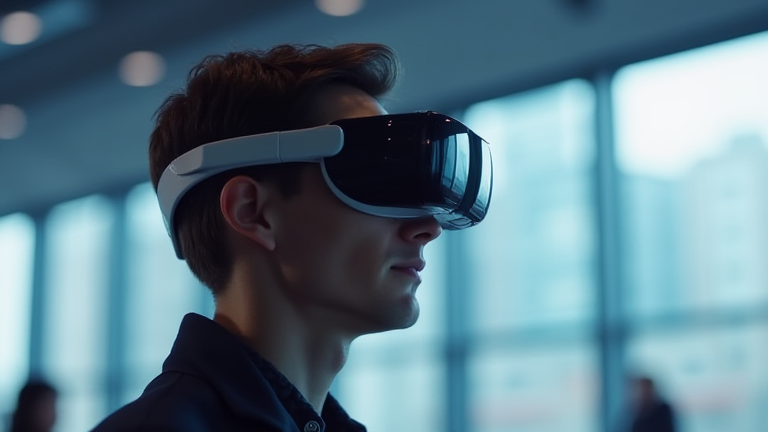
Why the Apple Vision Pro Headset Is the Future of Spatial Computing
TL;DR: The Apple Vision Pro redefines personal computing by seamlessly blending digital content with the physical world through high-fidelity spatial displays and intuitive hand-tracking controls. It establishes a new standard for immersive experiences, shifting the industry focus from flat screens to three-dimensional environments.
Since its official rollout, the Apple Vision Pro has cemented its position not merely as a VR headset, but as the first true computer designed for spatial computing. Unlike previous headsets that isolate the user in virtual worlds, the Vision Pro allows users to interact with digital objects while maintaining full awareness of their surroundings. This persistent connection to reality is the cornerstone of its long-term viability as a primary computing device.
If you want to dig deeper, check out our guide on 10 AI Use Cases for Shopify Stores to Boost Sales.
At the heart of this innovation lies the R1 and M2 chip architecture. The R1 chip processes data from twelve cameras, five microphones, and six speakers with an incredibly low latency of twelve milliseconds. This speed is critical for eliminating motion sickness and ensuring that digital overlays feel physically present. Meanwhile, the M2 chip powers the computational demands of the operating system, supporting thousands of apps and complex spatial rendering tasks. The headset features two high-resolution Micro-OLED displays with over 23 million pixels, offering a visual experience that rivals high-end monitors but spread across the user’s entire field of view. This level of clarity ensures that text remains readable and images remain vibrant, even during extended usage sessions.
Input methods have also been revolutionized. The Vision Pro eliminates the need for physical controllers, relying instead on eye tracking, hand gestures, and voice commands. This “natural” interface lowers the barrier to entry for non-technical users. Furthermore, the integration of macOS and iOS ecosystems means that users can drag and drop files between their Mac and the headset, or use their iPhone as a remote controller. This ecosystem synergy ensures that the Vision Pro does not exist in a silo but acts as a powerful extension of the existing Apple device lineup.
The industry impact is already visible. Developers are rapidly adapting their applications to utilize the new spatial APIs, creating experiences that were previously impossible. From architectural visualization to collaborative design tools, the potential use cases are vast. The headset serves as a proof of concept that mixed reality is ready for mainstream adoption, driving competitors to accelerate their own hardware and software development. However, challenges remain, particularly regarding weight, battery life, and price. Despite these hurdles, the Vision Pro sets a benchmark for what spatial computing should be, pushing the entire industry toward higher fidelity and more intuitive interactions.
As software libraries grow and content creators explore the unique capabilities of spatial media, the hardware will inevitably become lighter and more affordable. The Apple Vision Pro is not just a product; it is a catalyst. It signals the end of the era defined by the rectangular screen and the beginning of a new chapter where computing is ambient, immersive, and spatially aware. For tech enthusiasts and professionals alike, this device represents the tangible first step into a future where the boundary between the digital and physical worlds dissolves.
FAQ
Q: What is the primary difference between the Vision Pro and standard VR headsets?
A: The Vision Pro uses advanced passthrough cameras to blend digital content with the real world, allowing users to see their surroundings, whereas standard VR headsets typically block out reality entirely.
Q: Can the Apple Vision Pro be used with prescription glasses?
A: Yes, Apple offers compatible prescription lens inserts that can be easily attached to the inside of the headset, ensuring comfort for users who rely on corrective eyewear.
Q: How does the battery life affect the user experience?
A: The headset comes with a detachable battery pack that provides approximately two to three hours of mixed use, requiring users to plan their sessions or rely on wired power for extended periods.
Leave a Reply