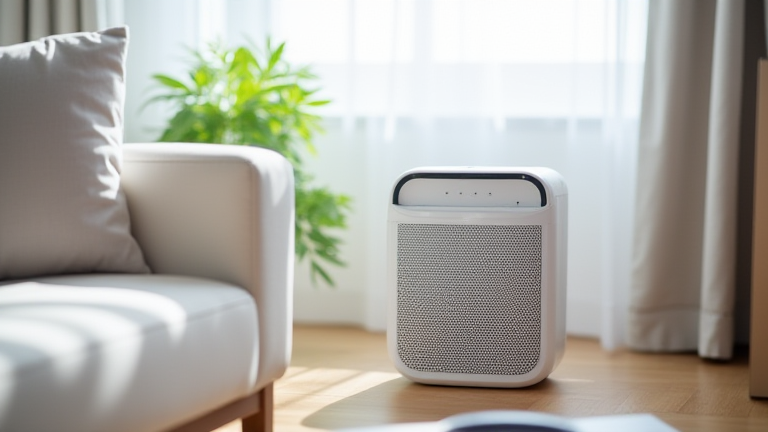
TL;DR: The best air purifiers for allergies use True HEPA filters that capture 99.97% of particles as small as 0.3 microns, effectively removing dust, pollen, and pet dander. Look for models with a Clean Air Delivery Rate (CADR) appropriate for your room size and a multi-speed fan to ensure continuous, efficient air circulation.
The Science of Clean Air
Allergies are not just a seasonal nuisance; they are an immune response to harmless substances like pollen, mold spores, and pet dander. According to the American Lung Association, indoor air can be twice as polluted as outdoor air, making filtration critical. True HEPA filters are the gold standard because they use a dense mesh of glass fibers to trap particles. Unlike “HEPA-like” or “HEPA-Plus” filters, which are often marketing gimmicks, True HEPA is strictly defined by standards set by the U.S. Department of Energy. When shopping, verify that the product explicitly states “True HEPA” rather than vague terminology.
If you want to dig deeper, check out our guide on 5 Simple Daily Habits to Boost Your Health Naturally.
Key Features to Consider
Beyond the filter type, the Clean Air Delivery Rate (CADR) is vital. This metric measures how quickly the purifier removes particles. A general rule is to select a purifier with a CADR number that is at least 50% higher than the cubic feet of your room. For example, a 200-square-foot bedroom requires a purifier with a CADR of 120 or higher. Additionally, consider noise levels. Look for models with a “sleep mode” that operates below 40 decibels, ensuring you can run the unit all night without disturbing your rest. Sleep quality is a cornerstone of wellness, and poor air quality can exacerbate snoring and congestion, leading to fragmented sleep.
Lifestyle Tips for Allergy Relief
Technology alone is not a complete solution. Pair your air purifier with lifestyle changes. Wash bedding in hot water weekly to kill dust mites. Use shoe racks at entryways to prevent tracking in outdoor pollen. Regularly vacuum with a HEPA-equipped vacuum cleaner to avoid recirculating particles. If you have pets, brush them outdoors or in a well-ventilated area to minimize dander distribution. These simple habits reduce the overall particle load, allowing your air purifier to work more efficiently and effectively.
FAQ
Q: How often should I replace HEPA filters?
A: Most manufacturers recommend replacing True HEPA filters every 6 to 12 months, depending on usage and air quality. Pre-filters can usually be washed and reused every few weeks.
Q: Can air purifiers remove viruses and bacteria?
A: While True HEPA filters capture some viruses and bacteria, they are not designed to neutralize them. For microbial threats, look for units with additional UV-C light or ionization features, though these should not replace medical advice.
Q: Is it better to have one large purifier or multiple small ones?
A> One large unit covering a central living area is often more effective than multiple small units in small rooms, as air circulates freely in open spaces. However, for bedrooms, a dedicated smaller unit ensures consistent filtration during sleep hours.
Leave a Reply