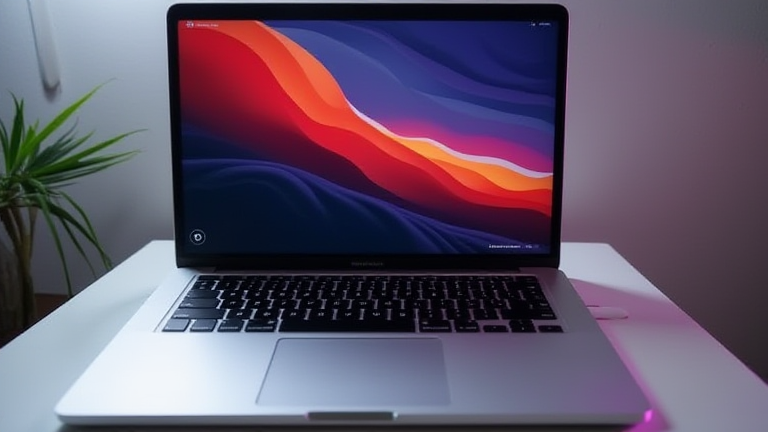
TL;DR: Yes, the Apple M3 chip is a worthwhile upgrade for most users due to its significant enhancements in GPU performance, hardware-accelerated ray tracing, and unified memory bandwidth. It offers a substantial leap in creative workflow speed and battery efficiency compared to the M1 and M2 generations, making it ideal for professionals and power users.
The New Standard in Silicon Performance
Apple’s latest silicon, the M3 series, marks a pivotal moment in laptop computing. Unlike previous iterations that focused primarily on CPU core counts, the M3 introduces a new GPU architecture that fundamentally changes how graphics are processed. This shift is not just about faster frame rates; it is about enabling new types of applications and workflows directly on the device without relying on external GPUs or cloud rendering. For MacBook Pro users, this means a more responsive interface, faster video editing timelines, and the ability to run complex 3D models locally with unprecedented efficiency. The industry is watching closely as this level of integration challenges traditional desktop workflows and forces competitors to rethink their own architectural strategies.
If you want to dig deeper, check out our guide on 10 Simple Daily Habits for Better Health and Longevity.
Key Specifications and Technical Deep Dive
At the heart of the M3 is a 3-nanometer process, which allows for higher transistor density and lower power consumption. The base M3 features a 4-core CPU and a 10-core GPU, while the M3 Pro and M3 Max variants scale up to 12 and 16 CPU cores respectively, with GPU cores reaching up to 40. Crucially, the M3 introduces hardware-accelerated ray tracing and mesh shading, technologies previously reserved for high-end desktop GPUs and gaming consoles. This addition significantly reduces the time required to render realistic lighting and shadows in creative applications like Blender and Final Cut Pro. Furthermore, the unified memory architecture has seen a bandwidth increase, with the M3 Max supporting up to 400GB/s. This ensures that data flows smoothly between the CPU, GPU, and Neural Engine, minimizing bottlenecks during heavy multitasking or large file handling. The integration of these components into a single package remains a testament to Apple’s vertical integration strategy.
Industry Impact and Market Position
The release of the M3 chip intensifies the competition in the high-performance laptop market. Windows-based laptops from Dell, Lenovo, and Microsoft are struggling to match the battery life and performance-per-watt metrics that Apple has established. While Intel’s new Meteor Lake and AMD’s Ryzen 7000 series offer competitive raw performance in specific multi-threaded tasks, they often lack the cohesive ecosystem benefits that come with Apple Silicon. For developers, the M3’s improved AI capabilities via the Neural Engine open new doors for on-device machine learning, allowing for real-time translation, image generation, and code assistance without sending data to the cloud. This privacy-focused approach is a major selling point in an era of increasing data security concerns. The industry impact is clear: the bar for what constitutes a “pro” laptop has been raised, forcing other manufacturers to prioritize efficiency and integrated graphics capabilities over sheer core count.
FAQ
Q: Is the M3 chip significantly faster than the M2?
A: Yes, the M3 offers up to 30% faster CPU performance and up to 2.5x faster GPU performance compared to the M2, primarily due to architectural improvements and the new 3nm process.
Q: Can the M3 MacBook Pro handle 8K video editing?
A: Absolutely, the M3 Pro and M3 Max models are optimized for 8K ProRes video workflows, allowing for smooth playback, editing, and export of high-resolution footage without lag.
Q: Does the M3 chip support external GPU expansion?
A: No, Apple Silicon Macs do not support eGPUs, but the built-in GPU performance is so robust that most users will not need external graphics expansion for professional creative tasks.
Leave a Reply