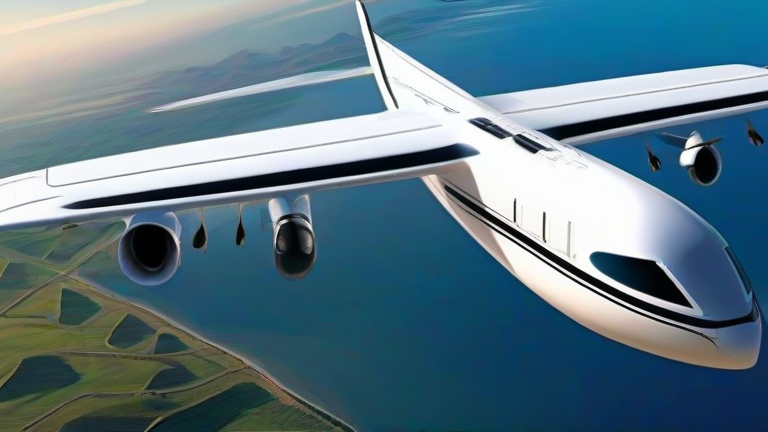
World’s Largest Electric Plane Flies 27 Mins on $5
TL;DR: The world’s largest electric aircraft completed a successful 27-minute flight costing only five dollars in energy. This breakthrough demonstrates that high-capacity electric aviation is now technically viable and economically competitive for short-range operations.
The aviation industry has long been tethered to the heavy, expensive, and polluting nature of jet fuel. However, recent advancements in battery density and lightweight composite materials have begun to erode these traditional barriers. The recent test flight of the largest electric plane to date marks a pivotal moment, not just for engineering, but for the broader economic landscape of air travel. By achieving a 27-minute flight duration on a mere five-dollar energy bill, developers have proven that the cost-of-energy variable for electric aviation is negligible compared to its combustion counterparts. This development shifts the primary financial challenge from fuel costs to upfront capital expenditure and battery lifecycle management, fundamentally altering the unit economics of regional air transport.
If you want to dig deeper, check out our guide on Is the Apple M3 Chip Worth the Upgrade for Your MacBook Pro?.
Market Analysis and Economic Impact
From a market perspective, this milestone targets the underserved regional and corporate aviation sectors. Currently, small turboprop aircraft dominate short-haul routes, but they suffer from high operating costs due to fuel consumption and maintenance complexity. Electric planes offer a compelling value proposition by reducing operating costs by up to 90% for sub-30-minute flights. For airlines, this translates to significantly higher margins on point-to-point routes within a 200-mile radius. The initial market entry will likely be driven by luxury charter services and corporate shuttle operations, where the premium for sustainability and lower noise pollution is a strong selling point. As battery technology continues to improve, the total cost of ownership (TCO) will decrease further, making electric aircraft attractive for municipal air taxis and emergency medical transport. The shift also aligns with global decarbonization mandates, positioning early adopters favorably with investors and regulators who are increasingly prioritizing ESG metrics in their decision-making processes.
Strategic Insights and Case Studies
Strategically, manufacturers must focus on vertical integration to maintain cost advantages. Unlike traditional aviation, where engines are often procured from specialized suppliers, electric aircraft rely heavily on proprietary battery packs and electric motor systems. Companies that control the entire stack from battery cell to aircraft assembly will have the greatest leverage over pricing and innovation cycles. A prime case study is Joby Aviation, which has secured significant funding and regulatory support by demonstrating a clear path to commercialization through simplified maintenance and lower operating expenses. Their strategy highlights the importance of securing airport infrastructure partnerships early, as electric planes require specific charging stations rather than complex fueling systems. Another relevant example is the eVTOL sector, where companies like Lilium and Archer are leveraging similar technology principles for urban air mobility. These case studies reveal that the barrier to entry is not just the aircraft itself, but the ecosystem of charging infrastructure and pilot training programs. Investors are currently favoring companies that can demonstrate clear revenue streams from early commercial operations, such as cargo delivery or high-net-worth individual transport, before scaling to mass passenger service. The five-dollar cost metric serves as a powerful marketing tool, simplifying the complex narrative of green aviation into a tangible, relatable financial benefit for potential customers and stakeholders alike.
FAQ
Q: Is the $5 cost figure inclusive of maintenance and labor?
A: No, the five-dollar figure refers strictly to the electrical energy cost for the 27-minute flight. It does not include pilot salaries, aircraft maintenance, or infrastructure costs, though these are generally lower for electric models than for combustion engines.
Q: How does this plane compare to traditional jet fuel costs?
A: Traditional jet fuel is significantly more expensive per unit of energy. For a similar flight duration, a combustion engine would likely cost several times more in fuel alone, making the electric alternative dramatically cheaper to operate on a per-flight basis.
Q: When will this technology be available to the general public?
A: Commercial availability for the general public is expected in the late 2020s, as regulatory certification and infrastructure development
Leave a Reply