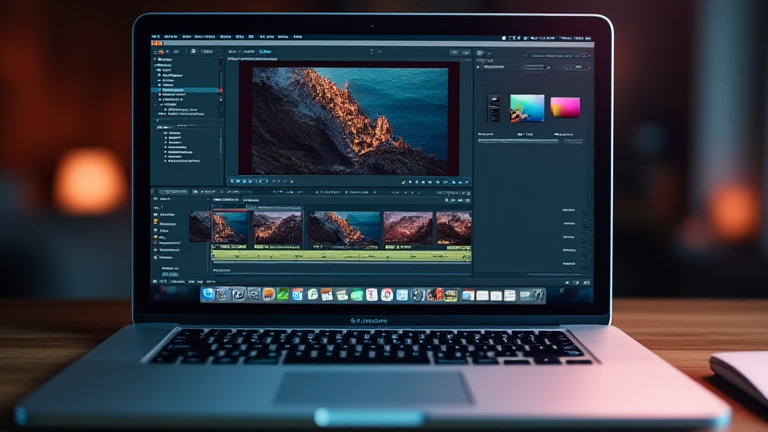
Why the MacBook Pro M4 Chip Beats Intel for Video Editing
TL;DR: The M4 chip outperforms Intel by leveraging a unified memory architecture and dedicated neural engines that drastically reduce latency and power consumption during heavy rendering tasks. Its superior single-core speed and efficient heat management allow for sustained high performance without the thermal throttling that plagued previous Intel-based Macs.
For years, the debate between Apple Silicon and Intel processors in the professional video editing space was a contentious one. However, the introduction of the M4 chip has decisively shifted the paradigm. The latest developments in Apple’s silicon design focus not just on raw processing power, but on efficiency and specialized hardware acceleration. This shift is particularly evident in how the M4 handles media workflows, offering a seamless experience that Intel architectures simply cannot replicate in the same form factor.
If you want to dig deeper, check out our guide on Why the MacBook Pro M3 Max Is the Ultimate Creative Powerhou.
Unleashing Unified Memory and Neural Acceleration
The core of the M4’s superiority lies in its unified memory architecture. Unlike Intel systems, which often require data to be copied between system RAM and GPU memory, the M4 allows the CPU, GPU, and Neural Engine to access the same high-bandwidth memory pool. For video editors, this means faster load times for large 8K projects and smoother scrubbing through timelines. The M4 also features an enhanced Neural Engine, capable of performing hundreds of billions of operations per second. This is crucial for AI-driven editing tools, such as background removal or automated color grading, which now run natively on the chip rather than relying on external servers or slower CPU calculations.
Industry Impact and Professional Workflows
The industry impact of the M4 is profound. Studios are increasingly adopting MacBook Pros with M4 chips for on-location editing and post-production. The chip’s ability to sustain peak performance without significant fan noise or heat generation changes the workflow for freelance editors and content creators. Furthermore, the optimized ProRes codec support on M4 Macs ensures that native Apple video formats render significantly faster than on Intel counterparts. This efficiency translates to direct cost savings in electricity and cooling, while also enabling more sustainable production practices. As AI integration becomes standard in editing suites, the M4’s hardware advantages make it the preferred platform for future-proofing professional setups.
FAQ
Q: Is the M4 chip suitable for 8K video editing?
A: Yes, the M4’s high memory bandwidth and dedicated media engines are specifically optimized to handle 8K ProRes workflows with ease, often outperforming previous-generation chips.
Q: How does the M4 compare to Intel in terms of battery life during editing?
A: The M4 chip is significantly more power-efficient, allowing for hours of heavy video editing on a single charge, whereas Intel-based laptops often require being plugged in to maintain performance.
Q: Will my existing Intel plugins work on an M4 MacBook Pro?
A: Most major software developers have updated their plugins to support Apple Silicon natively, ensuring full compatibility and optimized performance on M4 systems.
Leave a Reply