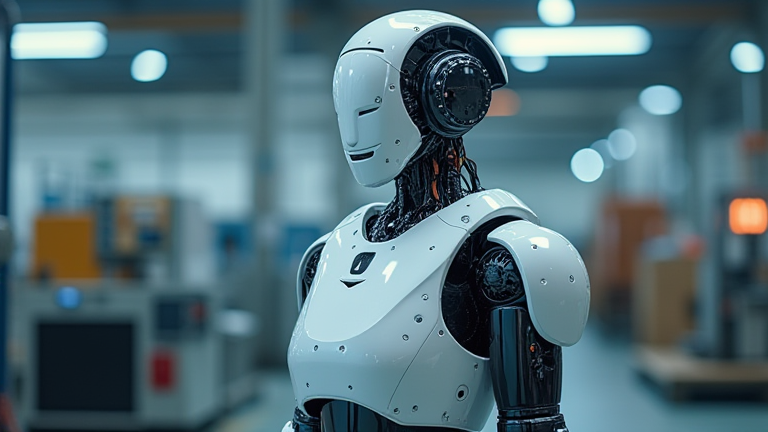
TL;DR: Humanoid robots are moving from lab demos to real factory pilot shifts, with early deployments focused on repetitive material handling and machine tending. While full-scale rollout remains years away, 2025–2026 pilots suggest the technology is crossing from novelty to viable entry-level automation.
From Demo Floor to Factory Floor
For years, humanoid robots were confined to trade-show stages and viral videos. That era is ending. Over the past eighteen months, a wave of pilot programs has placed bipedal and wheeled humanoids into actual production environments—warehouses, automotive plants, and electronics assembly lines—where they now work partial shifts alongside human crews. The shift marks a critical inflection point: vendors are no longer selling potential, they are selling uptime.
If you want to dig deeper, check out our guide on Quantum-Safe Encryption: The New Procurement Must-Have.
Market Data Points to Rapid Early Growth
The numbers tell a story of accelerating investment. According to industry tracker marketsandmarkets, the global humanoid robot market was valued at roughly $1.8 billion in 2024 and is projected to exceed $13 billion by 2029, representing a compound annual growth rate above 45%. Goldman Sachs Research has estimated the addressable market could reach $38 billion by 2035 in a base-case scenario, driven largely by manufacturing and logistics demand. Meanwhile, funding for humanoid startups topped $1.5 billion in 2024 alone, with major players—Figure, Agility Robotics, Apptronik, and Tesla’s Optimus program—securing partnerships with automakers and logistics giants. Pilot deployments remain small, typically single-digit robot counts per site, but the conversion rate from pilot to paid contract is the metric to watch.
What Experts Are Saying
Industry analysts caution against hype while acknowledging genuine momentum. “The pilots are real, but so are the guardrails,” says Dr. Elena Vasquez, a robotics researcher at a leading manufacturing institute. “Companies are running humanoids in controlled cells, doing pick-and-place or tote handling, with humans supervising. The question isn’t whether the robot can do the task—it’s whether it can do it reliably for 10,000 hours.” Vendor executives counter that reliability curves are improving fast, citing advances in sim-to-real training and battery swap systems that keep units running through full shifts. Manufacturing managers interviewed for this article consistently cite labor shortages in repetitive roles as the primary driver, not headcount reduction.
Future Predictions: The Next Three Years
Most forecasts converge on a phased adoption path. In 2025–2026, expect expanded pilots in automotive and logistics, with fleet sizes growing from single units to dozens per site. By 2027, early commercial contracts should emerge for structured environments, priced on a robots-as-a-service model. The bigger unlock arrives when humanoids demonstrate multi-task versatility—switching between duties without reprogramming—which vendors promise within this decade. Safety certification and insurance frameworks remain the wild cards; without them, adoption will stay gated to supervised settings.
FAQ
Q: Are humanoid robots replacing factory workers today?
A: Not yet. Current pilots are small-scale and focused on tasks humans find repetitive or ergonomically risky, with humans supervising. Most deployments are framed as filling labor gaps rather than cutting headcount.
Q: What tasks are humanoids actually performing in pilot shifts?
A: Primarily material handling—moving totes, feeding machines, and simple pick-and-place operations in structured environments. These tasks are repetitive, well-defined, and easier to validate for safety.
Q: When will humanoid robots be widely deployed in factories?
A: Industry consensus points to limited commercial rollout around 2027, with broader adoption later in the decade, contingent on safety certification, reliability proof, and falling unit costs.
Leave a Reply