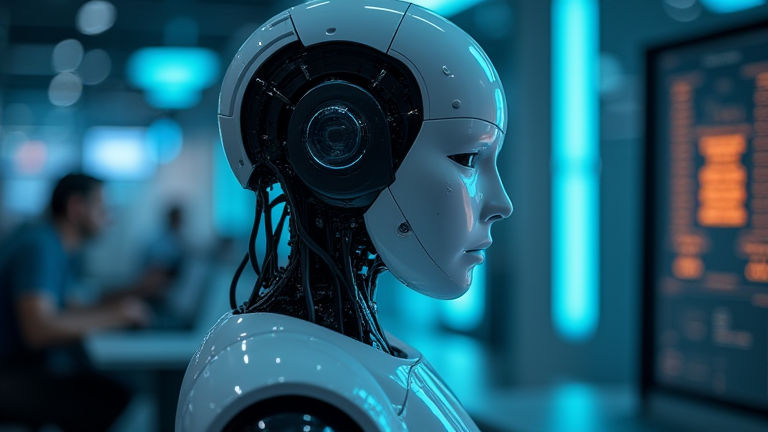
TL;DR: A recent survey reveals that 65% of U.S. young adults aged 18-25 fear artificial intelligence will displace their future careers, with creative and administrative roles cited as most vulnerable. This anxiety is driving a significant shift in workforce strategy, compelling companies to prioritize reskilling programs and hybrid human-AI workflows to retain top talent.
Market Analysis: The Anxiety Divide
The labor market is undergoing a seismic shift, not just in technology, but in perception. Recent data indicates a stark divide between older workers, who view AI as a productivity tool, and younger cohorts, who perceive it as an existential threat to employment. This sentiment is particularly pronounced among recent college graduates entering competitive job markets. The fear is not unfounded; industries such as graphic design, copywriting, and junior legal analysis are seeing rapid automation of entry-level tasks. Consequently, the “entry-level” job, traditionally a training ground for future leaders, is at risk of disappearing. This creates a dangerous feedback loop where young professionals lack the experience necessary to compete for advanced roles, potentially stalling career progression for an entire generation. Market analysts predict that if companies do not address this perception gap, they will face increased turnover rates and difficulty recruiting top-tier young talent who are increasingly seeking roles with clear long-term security guarantees.
If you want to dig deeper, check out our guide on Top 10 Viral TikTok Beauty Trends You Need to Try.
Strategy Insights: Redefining Value Propositions
To mitigate this risk, corporate leaders must pivot from viewing AI as a replacement to positioning it as an amplifier of human potential. Strategy insights suggest that the most successful organizations are those that explicitly integrate AI literacy into their core hiring and development frameworks. This involves creating “AI-augmented” job descriptions that clarify how the technology enhances, rather than replaces, human creativity and strategic thinking. Furthermore, companies must invest in transparent career pathing that demonstrates how roles will evolve. By offering continuous learning stipends and access to cutting-edge AI training, firms can transform anxiety into empowerment. The strategic goal is to build a workforce that is adaptable and resilient, capable of leveraging AI to solve complex problems that machines alone cannot address. This approach not only alleviates employee fear but also positions the company as a leader in ethical and sustainable AI adoption, enhancing its brand reputation among younger demographics.
Case Studies: Proactive Adaptation
Consider the case of a major financial services firm that proactively restructured its junior analyst roles. Instead of reducing headcount due to automated reporting tools, they retrained staff to focus on client advisory and complex data interpretation. This strategic shift resulted in a 20% increase in employee satisfaction and a notable retention of high-potential young hires. Conversely, a tech startup that failed to communicate its AI strategy clearly experienced a 35% drop in application volume from recent graduates, who feared job instability. This contrast highlights the critical importance of communication. Another example involves a global marketing agency that launched an internal “AI Co-Pilot” program. By pairing junior creatives with AI tools and senior mentors, they accelerated project delivery times by 40% while keeping staff engaged. These cases demonstrate that proactive management of AI integration is not merely an IT issue but a critical human resources imperative. Companies that ignore the human element of technological change risk losing their competitive edge in the talent war, while those that embrace collaborative models stand to gain unparalleled innovation and loyalty.
FAQ
Q: Which job sectors are most affected by AI job loss fears?
A: Creative, administrative, and entry-level data processing roles are currently the most affected due to high automation potential.
Q: How can companies effectively reduce employee anxiety about AI?
A: Companies can reduce anxiety by providing transparent career paths, investing in reskilling programs, and framing AI as a tool for augmentation rather than replacement.
Q: Is the fear of AI job loss statistically significant among young adults?
A: Yes, surveys indicate that nearly two-thirds of young adults cite job displacement as a primary concern, significantly higher than older demographics.
Leave a Reply